


The 10 Most Impressive Palaces in Rio de Janeiro
Most visitors come to Rio for the beaches and the views. Few expect to find a city full of palaces. Yet Rio was the seat of the entire Portuguese Empire from 1808 to 1821, then the capital of the Brazilian Empire, and finally the capital of the Republic until 1960. Kings, emperors, princesses and presidents all needed somewhere to live and rule.
The result is a collection of royal, imperial and presidential buildings you won’t find anywhere else in the Americas. Some are museums you can walk into on a Wednesday afternoon. Others are still working government buildings that open their doors only on certain days.
We at Rio Cultural Secrets have been taking guests through these palaces since 2012. Below are the ones we think impress the most, and the stories behind them. Two of them are up in Petrópolis, the imperial summer town in the mountains, an easy and rewarding day trip from Rio.
1. Guanabara Palace (Palácio Guanabara)
Guanabara Palace began as a merchant’s country house in 1853 and became the home of Princess Isabel, heir to the throne, and her husband, the Count of Eu. In those days it was called Paço Isabel. When the monarchy fell in 1889, the new Republic took it from the imperial family.
That decision started one of the longest-running lawsuits in Brazilian history. Isabel’s descendants fought for the building for more than a century, until Brazil’s Supreme Court ruled in 2018 that it belongs to the federal government.
In between, the palace saw plenty of drama. Getúlio Vargas lived here during his Estado Novo dictatorship, and in 1938 fascist-inspired Integralists stormed the grounds in a failed coup. Since 1960 it has been the seat of government, today of the State of Rio de Janeiro. Look for the domed towers on the corners of the ochre façade, restored to their original colour in the 2010s.
2. Laranjeiras Palace (Palácio Laranjeiras)
If Guanabara is imperial, Laranjeiras is pure Belle Époque. The Guinle family, among the richest in Brazil, built it between 1909 and 1913. Their architect was the Frenchman Joseph Gire, the same man behind the Copacabana Palace hotel, and you can feel the French influence in the mansard roof, the gilded salons and the grand staircase.
The federal government bought the house in the 1940s to receive heads of state. President Juscelino Kubitschek lived here rather than at Catete Palace, where his predecessor had died. Darker history happened here too: it was at Laranjeiras, in December 1968, that the military regime’s leadership met to approve AI-5, the decree that ushered in the harshest years of the dictatorship.
Since 1975 it has been the official residence of the governor of Rio de Janeiro state.
3. Ilha Fiscal Palace (Palácio da Ilha Fiscal)
It looks like it floated out of a fairy tale: a small green neo-Gothic castle sitting on its own island in Guanabara Bay. It was actually built as a customs post for the port, and opened in 1889.
What made it famous happened that same year. On 9 November 1889, Emperor Pedro II threw a lavish ball here for the officers of a visiting Chilean warship. Six days later the monarchy was overthrown. Brazilians still call that night “the last ball of the Empire”, and a copy of the painting of the party hangs inside.
The Brazilian Navy has looked after the island since 1914 and recently finished a structural restoration.
4. Quitandinha Palace, Petrópolis (Palácio Quitandinha)
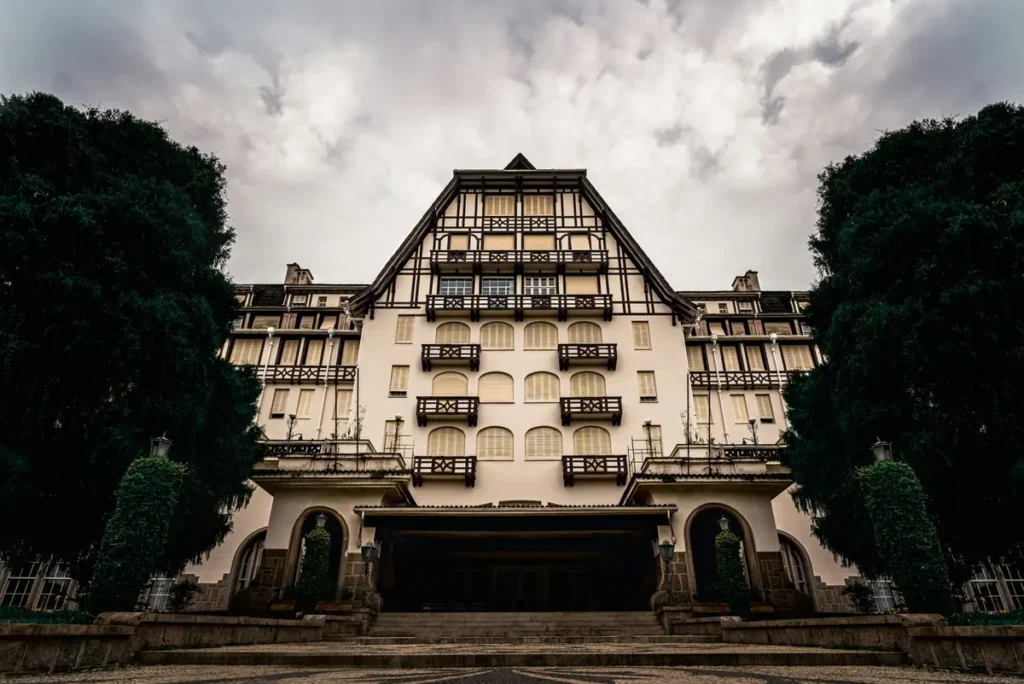
Quitandinha is the most surprising building on this list. It isn’t royal at all. It opened in February 1944 as a hotel-casino, built by businessman Joaquim Rolla to be the largest and most glamorous in Latin America, with some 440 rooms.
The interiors were designed by Dorothy Draper, the American decorator famous for her bold Hollywood style. Think candy-pink walls, oversized black-and-white floors and a domed theatre. Carmen Miranda, Orson Welles and Eva Perón all passed through. Then, in 1946, Brazil banned gambling, and the casino’s glory years ended almost as soon as they began.
Today part of the building is private apartments. The grand social areas belong to Sesc, a non-profit that restored them and runs them as a cultural centre. The lake out front is said to be shaped like a map of Brazil.
Where: Avenida Joaquim Rolla 2, at the entrance to Petrópolis, about 1h15 from Rio.
Can you go inside? Yes, and this is one of the easiest palaces to visit. The cultural centre is open Tuesday to Sunday, entry is free, and Sesc runs free guided tours through the day. There’s also a bistro in the old Central Bar if you want lunch with a view of the salons.
5. Itamaraty Palace (Palácio do Itamaraty)
Built between 1851 and 1855 for the Count of Itamaraty, this neoclassical mansion in downtown Rio has one of the richest résumés in the country. After the monarchy fell, it became the first seat of the new Republic’s presidency, from 1889 to 1897.
Then it became the home of Brazil’s Ministry of Foreign Affairs until 1970. The ministry was so tied to the building that Brazilians still call their diplomatic service “Itamaraty”, and Oscar Niemeyer’s ministry in Brasília borrowed the name.
The highlight is the inner garden: a long reflecting pool lined with imperial palms. Inside are the Historical and Diplomatic Museum, a historic map library and archives going back to the arrival of King João VI. It was one of the first buildings protected by Brazil’s heritage institute, in 1938.
6. Imperial Palace, Petrópolis (Museu Imperial)
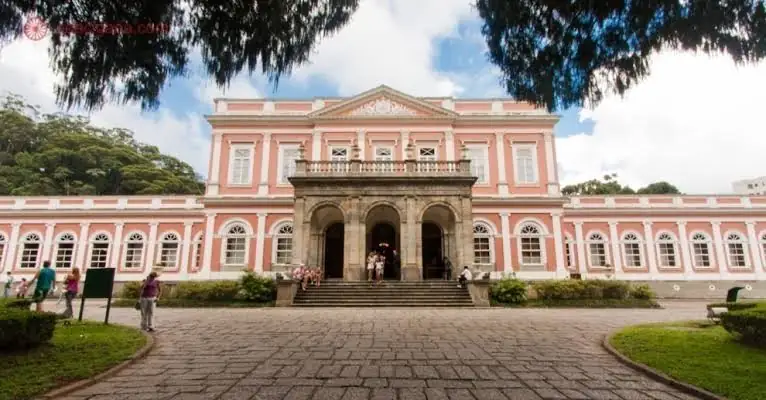
If you visit only one palace outside the city, make it this one, ideally as part of a Petrópolis day trip. Emperor Pedro II built it between 1845 and 1862 as his summer home, and he loved it so much that the whole town of Petrópolis grew up around it.
After the Republic exiled the imperial family, the building served as a school for decades. In 1940 Getúlio Vargas signed the decree creating the Imperial Museum, and it opened in 1943. Today it holds the most important collection on the Brazilian Empire, around 300,000 items.
The stars of the visit are the crowns of Pedro I and Pedro II, the imperial regalia, and the pen Princess Isabel used to sign the Golden Law that abolished slavery in 1888. You’ll walk the dining room, the music room and the private apartments much as the family left them. Before going in, staff hand you felt slippers to slide over the old wooden floors. Our guests always smile at that part.
Where: Rua da Imperatriz 220, historic centre of Petrópolis.
Can you go inside? Yes. The museum opens Tuesday to Sunday, with a modest entry fee, and the gardens are free. On some evenings it puts on a sound-and-light show about imperial history. It’s closed on Mondays, and it can close during big events in town such as Carnival, so check the museum’s Instagram before you go.
7. Catete Palace (Palácio do Catete)
For 63 years, from 1897 to 1960, this was Brazil’s White House. It was built in the mid-1800s as the city home of the Baron of Nova Friburgo, one of the great coffee barons, and it shows: marble, stained glass, painted ceilings and a ballroom made to impress. Look up at the roof and you’ll see the bronze eagles that earned it the nickname Palace of the Eagles.
The building’s most famous room is also its most sombre. On 24 August 1954, under enormous political pressure, President Getúlio Vargas took his own life in his bedroom on the third floor. The room is preserved, and it’s one of the most moving stops in any Rio itinerary.
When the capital moved to Brasília, the palace became the Museum of the Republic. Behind it is a large historic garden with a lake, little bridges and a grotto, a favourite shady corner for locals.
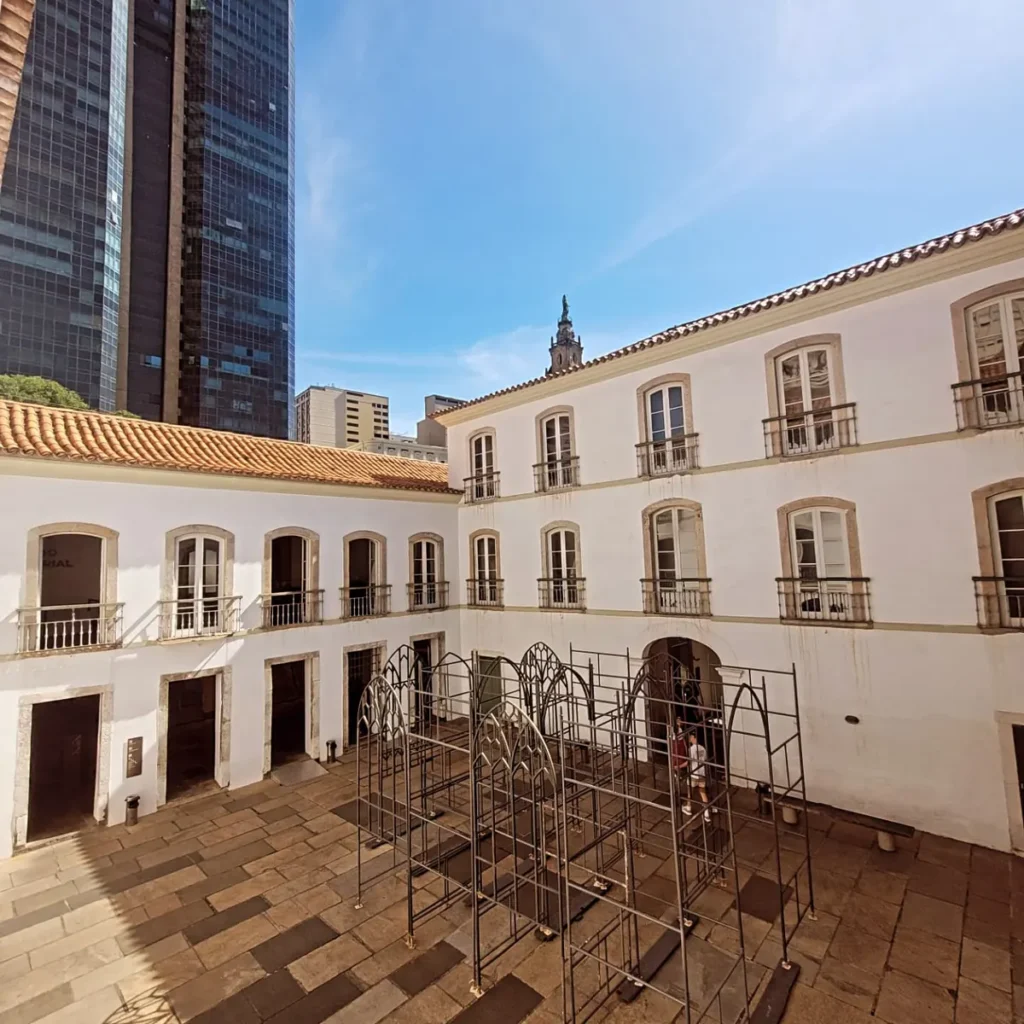
8. Paço Imperial
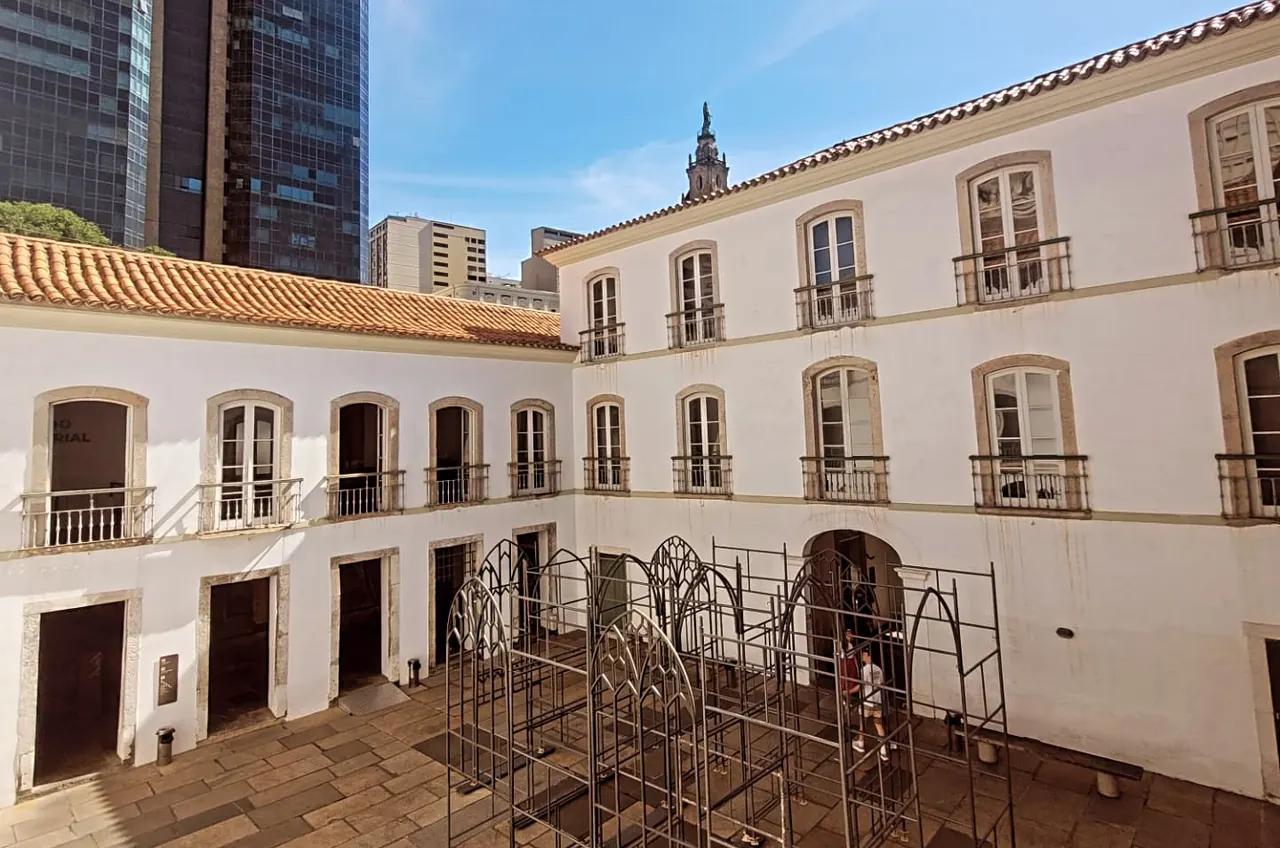
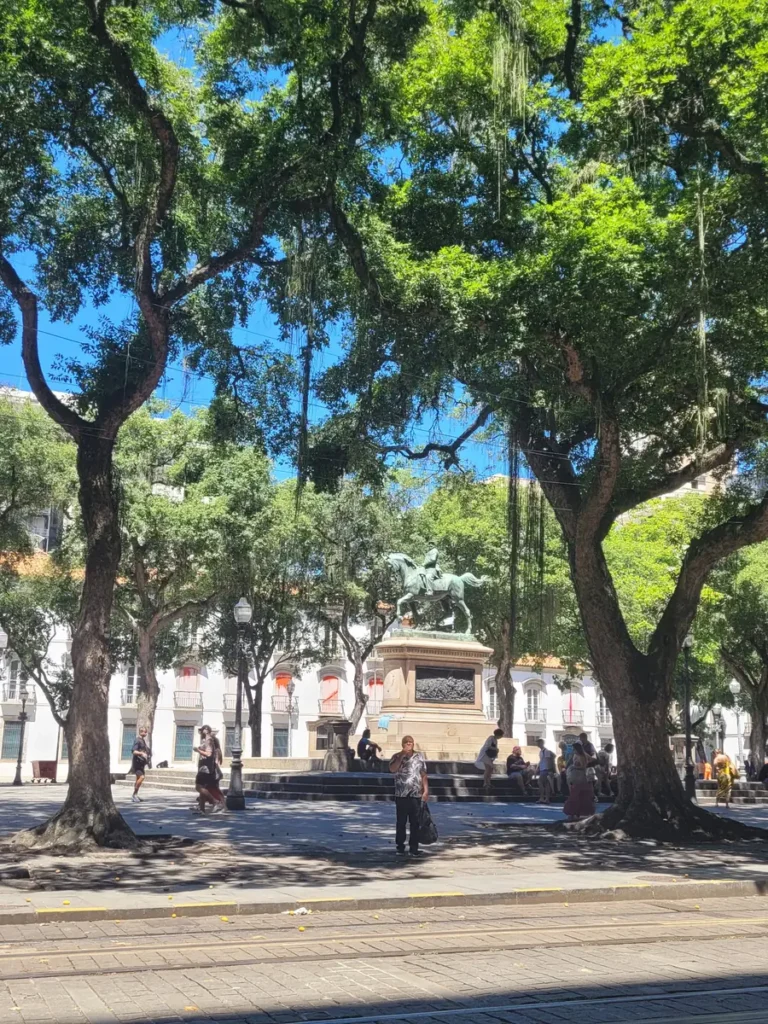
The Paço Imperial doesn’t look like a palace at first. It’s a long, low, whitewashed colonial building facing Praça XV, much simpler than the others on this list. But more Brazilian history happened inside these walls than anywhere else in the country.
It opened in 1743 as the house of Portugal’s colonial governors, modelled on the royal palace in Lisbon, and later became the viceroys’ residence. When the Portuguese royal family fled Napoleon and landed in Rio in 1808, it became the Royal Palace. Pedro I was acclaimed emperor here. And on 13 May 1888, Princess Isabel signed the Golden Law abolishing slavery inside this building.
After the Republic, it was turned into the city’s main post office and slowly decayed. A careful restoration brought it back in the 1980s, and since 1985 it has been a cultural centre. In 2026 it marked 40 years with a large art exhibition and reopened its main gate facing Guanabara Bay for the first time since the pandemic.
Where: Praça XV de Novembro 48, Centro.
Can you go inside? Yes, freely. Entry to the courtyards and exhibitions is free, and there’s a bookshop and a pleasant restaurant in the inner courtyard. On Saturdays an antiques fair fills the square outside. It’s a short walk from the Ilha Fiscal departure point, so the two pair perfectly. The Paço is also a highlight of our private walking tour of downtown Rio.
9. São Cristóvão Palace (Paço de São Cristóvão)
This is where Brazil’s royal story truly lived. A wealthy merchant gave his hilltop manor to King João VI when the court arrived in 1808, and it grew into the main residence of the royal and then imperial family. Pedro II was born here in 1825 and spent most of his life here.
After the Republic, the palace hosted Brazil’s first republican constitutional assembly. From 1892 it became home to the National Museum, the country’s oldest scientific institution, with some 20 million objects.
On 2 September 2018, a fire destroyed most of the building and its collection. It was one of the saddest days in Rio’s recent memory. Reconstruction has been slow but real: the façades are restored, and in 2025 the palace partly reopened for the first time, with the Bendegó meteorite, over five tonnes of iron, (which survived the flames) and a 15.7-metre sperm whale skeleton hanging over the marble staircase. You can follow the rebuild on the museum’s Instagram.
How to Plan Your Palace Days
The palaces fall naturally into four outings. Trying to see them all in one day is a mistake; Rio traffic will win.
Outing | Palaces |
|---|---|
Downtown morning | Paço Imperial, Ilha Fiscal, Itamaraty |
Catete and Laranjeiras | Catete, Guanabara, Laranjeiras |
North Zone half day | São Cristóvão Palace and Quinta da Boa Vista |
Petrópolis day trip | Imperial Museum, Quitandinha |
Seeing Rio’s Palaces With Us
We at Rio Cultural Secrets design fully private tours, never mixed groups, so the day runs at your pace. Our guides are Cariocas who know these buildings well, and we handle the timing, tickets and transport so the stories come to life in English. Our Petrópolis day trip covers the Imperial Museum, Avenida Koeler and Quitandinha, and our historic tour of Rio includes the Paço Imperial and Praça XV.
Get in touch and we’ll build a palace day around your interests.
