

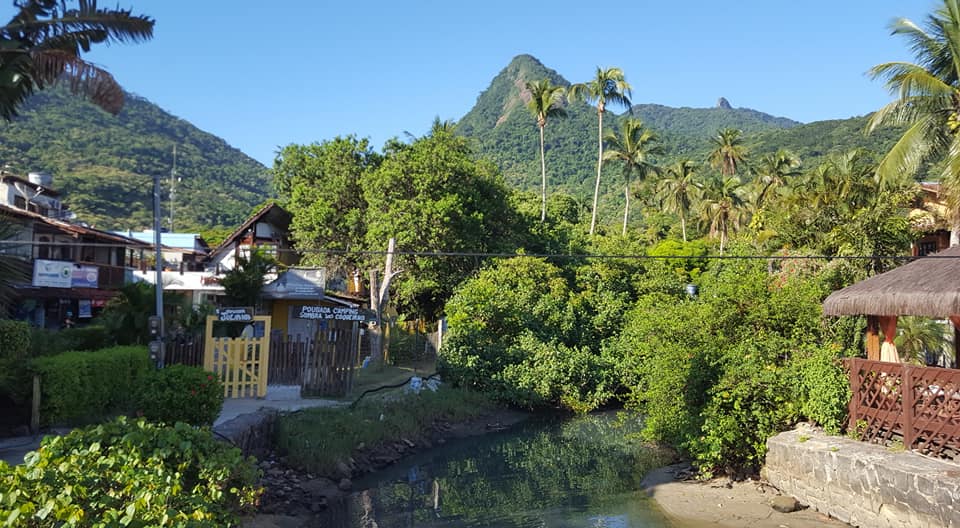

Ilha Grande Travel Guide
Ilha Grande is the trip I recommend when someone tells me they’ve had enough of cities. There are no cars on the island. There are 86 beaches, most of them reachable only by boat or on foot, and a single proper village where everyone eventually crosses paths. Getting there takes some planning, and that’s exactly what keeps it the way it is.
Here’s what you need to know.
How to get from Rio to Ilha Grande
Whatever you choose, the trip has two parts: you drive or ride to the coast, and then you take a boat. No road reaches the island, and no cars are allowed on it.
The best way is to head for Conceição de Jacareí and take the fast speed boat straight across to Vila do Abraão. It’s the shortest crossing — roughly 15 to 25 minutes — it has the most departures through the day, and it’s the closest pier to Rio. Angra dos Reis is the other option, about half an hour further along the coast, with fast boats leaving from the Santa Luzia pier. Either way, take the fast boat.
Private transfer. The option I’d choose. A driver collects you at your hotel in Rio and takes you straight to the pier, with your boat already booked for a departure that lines up with your arrival. No bus timetables, no standing on the roadside with luggage, no discovering that the last fast boat left twenty minutes ago. Some operators run a door-to-pousada service that includes the crossing.
Official taxi. If you’d rather take a taxi to the coast, use a registered one booked through your hotel, and agree the price before you leave. It’s a two-hour-plus drive, so confirm the fare and the pier — Conceição and Angra are about half an hour apart, and you don’t want to be dropped at the wrong one.
Bus. Costa Verde runs from Rodoviária Novo Rio towards Angra dos Reis. If you want Conceição de Jacareí, tell the driver when you board — the stop is on the highway, and the pier is a five-minute walk away. To Angra it’s about two and a half hours, then a short taxi to the pier. Cheap, reliable, and slower.
Two practical things. Buy your boat ticket for the return as well, especially in high season. And bring cash — card machines on the island depend on a signal that isn’t always there.
What to do in Ilha Grande
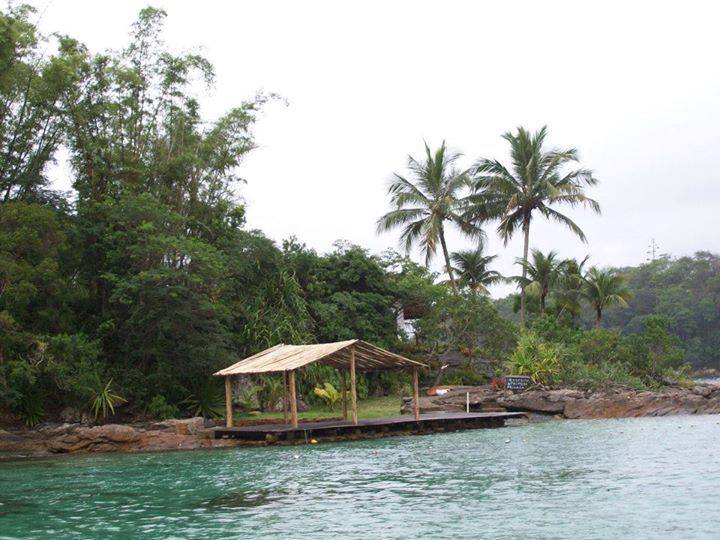
There’s more here than a day allows, and the island rewards people who pick two or three things and do them properly rather than chasing everything. These are the ones I’d choose, and there’s more on all of them in our guide to Ilha Grande adventures.
Hiking
This is the main event. The island is criss-crossed with marked trails through Atlantic rainforest, most of them old caiçara paths connecting one beach community to the next. The classic is the walk from Abraão to Lopes Mendes, around two and a half hours each way through the forest. The trail to Dois Rios crosses the island to the site of the old prison, roughly three hours. Shorter ones lead to Praia da Feiticeira, the Feiticeira waterfall, and the Lazareto ruins just outside the village.
Take a guide for anything long. The trails are marked but the forest is dense, the humidity is serious, phone signal disappears, and people do get lost. Boots or trainers, not sandals. More water than you think. If you’re planning to walk seriously, our page on hiking in Ilha Grande breaks the trails down by difficulty and time.
Boat tours
The standard day trip loops around the calm north side — Lagoa Azul for snorkelling, Freguesia de Santana with its little 18th-century church, Japariz, Saco do Céu. Another route runs east to Lopes Mendes, Praia do Pouso and the beaches near Palmas.
The big schooners are cheap and sociable; a small or private boat lets you decide how long to stay somewhere and skip the stops you don’t care about. Whichever you take, book through your pousada and check the boat is licensed — the island sits inside a state park and a protected marine area. We compare the routes and the operators in our rundown of the best Ilha Grande boat tours.
Caiçara life
The caiçaras are the coastal communities descended from Indigenous peoples, Portuguese settlers and Africans, and they’ve been fishing this coast for centuries. Villages like Provetá, Araçatiba, Aventureiro and Freguesia de Santana are still working communities, not attractions — people live there, fish there, and grow what they eat.
Visiting well means going with someone who knows them, buying lunch from a family kitchen, listening rather than photographing. It’s the part of Ilha Grande most visitors skip entirely, and it’s the part I’d send you to first.
Fishing
Fishing is the island’s oldest livelihood, and local fishermen take visitors out. It’s simple — a wooden boat, hand lines, a few hours in the bay, and often lunch cooked with what you catch. Ask your pousada to put you in touch with someone local rather than booking through an agency. The money goes where it should, and the conversation is better.
Snorkelling
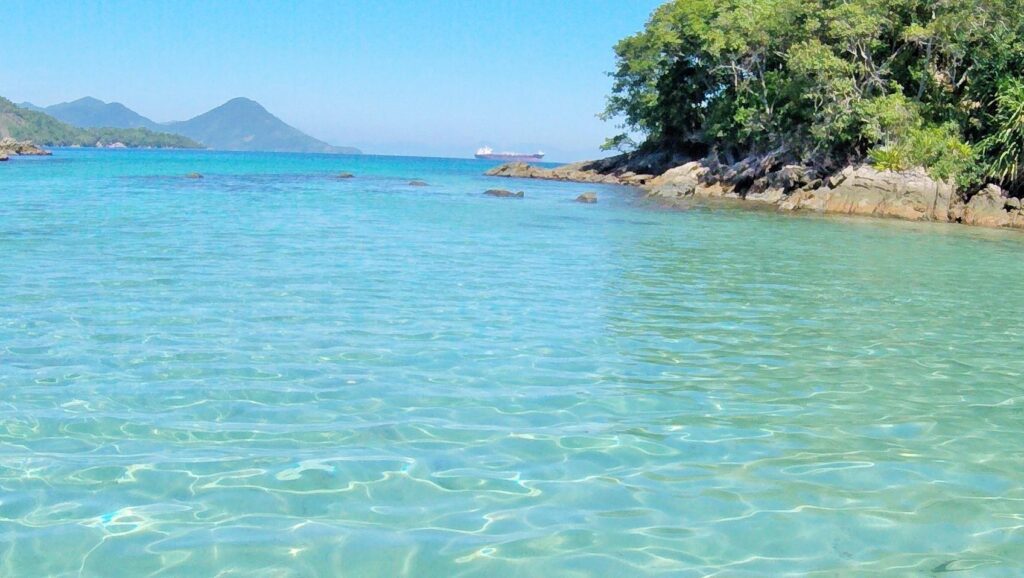
The sheltered north side has the clearest water. Lagoa Azul is the well-known spot, a natural pool between small islands with plenty of fish. Saco do Céu, Freguesia de Santana and the coves around Araçatiba are quieter alternatives, and there are decent stretches of rock close to Abraão.
Most boat tours hand out masks, but if you snorkel often, bring your own. The rental gear leaks, and you’ll spend the afternoon emptying it.
How far is Ilha Grande from Rio de Janeiro
The island lies about 150 km west of Rio, on the stretch of coast we call the Costa Verde.
In travel time, allow three to four hours door to door. Conceição de Jacareí is roughly 135 km from Rio — about two hours by car — plus the short crossing. Angra dos Reis is a little over 150 km, around two and a half hours, plus half an hour on a fast boat. Add the waiting time at the pier, and add more on a Friday or before a holiday, when the Rio–Santos highway backs up.
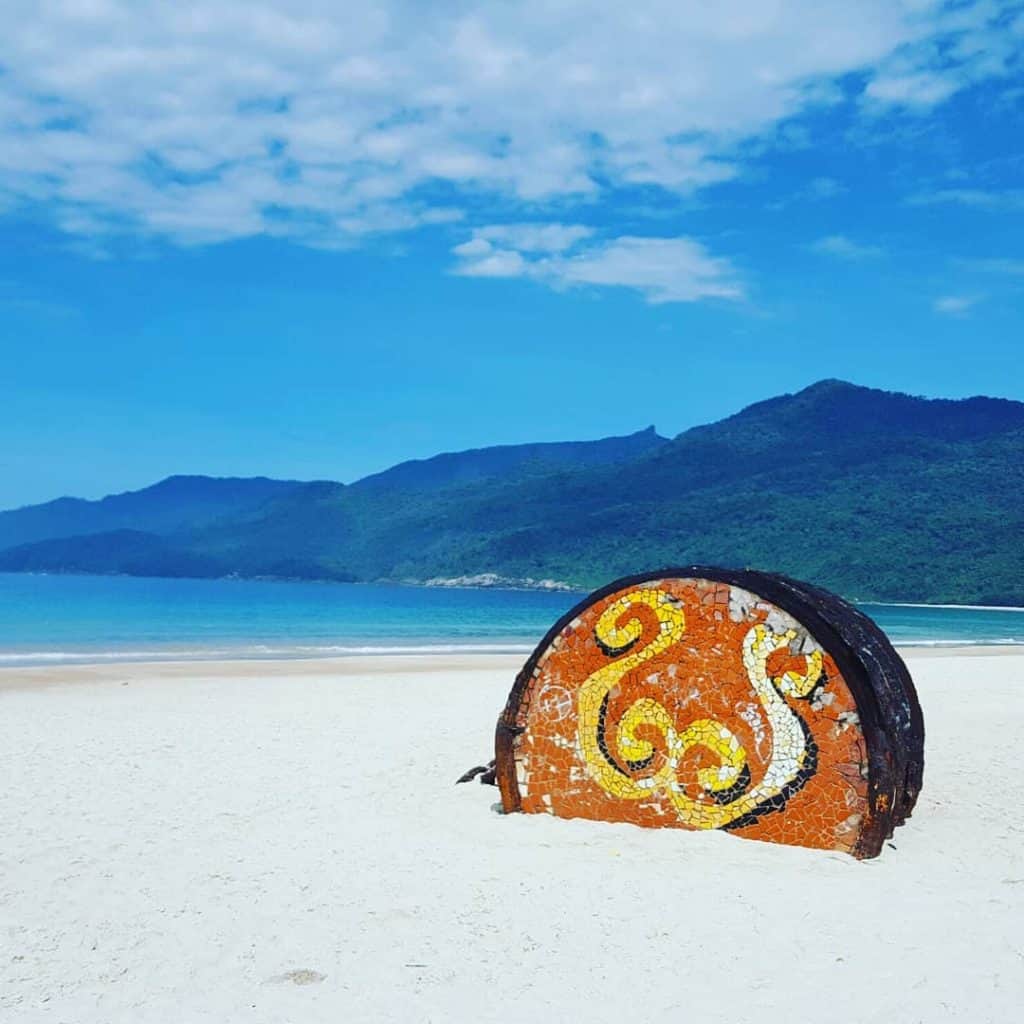
Where to stay in Ilha Grande
Three areas, and they suit very different trips.
Vila do Abraão is the main village and where most people stay. It has the pier, the restaurants, the dive shops, the health post and almost all the pousadas. Everything is walkable and nothing is far.
Praia de Palmas is quieter, a short boat ride or a walk over the hill from Abraão, and closer to the Lopes Mendes trail. You trade restaurants and nightlife for a beach at your door.
Aventureiro is the far end of the island — a small caiçara community inside a protected reserve, with simple pousadas and camping, limited electricity and no comforts to speak of. Getting there is a long boat trip. People who love it really love it.
A few places I’d point you to:
Pousada Naturalia — on Praia do Canto, about a fifteen-minute walk from the Abraão pier, built on the slope with the forest behind it. Most rooms face the sea, each with a balcony and a hammock. The best views in the village, and the walk back up after dinner is the price you pay for them.
Pousada Ouro Verde — a simple, small pousada set back in the greenery a short walk from Abraão beach and the centre. Plain rooms, good breakfast, honest value.
Pousada Toca do Mar — right on the sand at Praia de Palmas, sea-view rooms, and the closest thing to waking up in the water. Around 2.5 km from Lopes Mendes.
Suítes Sol e Mar — also at Palmas, literally feet from the beach. Simple, family-run, and the sound of the waves is the soundtrack all night.
Paraíso Azul Retiro — a different proposition, on Praia Pequena at Freguesia de Santana on the island’s north side, near Lagoa Azul. Pool, sauna, a yoga room over the ocean, and its own restaurant. Remote — you arrive by boat and you stay put — which is the whole point.
Book ahead for January, February, Carnival and Brazilian holiday weekends. The island has a limited number of beds and it does sell out.
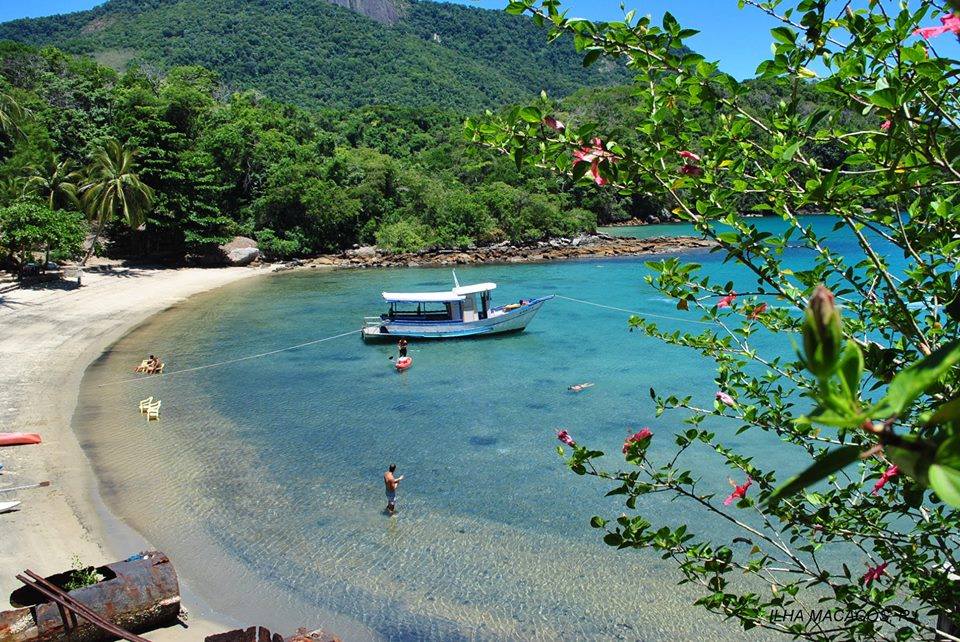
If you want luxury, stay in Angra instead
Here’s the honest part: there is no luxury hotel on Ilha Grande. The pousadas are small, family-run and simple by design, and that’s the character of the island. If you want a five-star room, a spa and a proper restaurant at the end of the day, you won’t find it there.
What you can do is base yourself on the mainland at the Hotel Fasano Angra dos Reis, at Praia do Frade, and come to the water from there. It has 60 rooms, a large spa, a golf course, its own marina and a beachfront restaurant, and boats leave straight from the hotel’s own pier. From there you can spend your days on private boat trips through the Angra dos Reis archipelago — Ilha da Gipoia, the coves around the bay, and Ilha Grande itself. Our Angra dos Reis full day tour from Rio covers exactly that stretch of water.
It’s a completely different trip from staying in Abraão. Both are good. They’re just not the same holiday, and it’s worth deciding which one you’re booking.
How to get from Paraty to Ilha Grande
There’s no boat from Paraty to Ilha Grande and no boat from Paraty to Angra. You travel overland to Angra dos Reis first, then cross by fast boat. Two steps, no shortcuts.
Paraty to Angra dos Reis takes around two hours. By car or private transfer it’s the most comfortable option and gives you control over the timing. The Costa Verde buses run the route regularly and cost very little. An official taxi booked through your hotel works too — agree the fare before you set off, and make sure the driver takes you to the Santa Luzia pier, where the fast boats leave from.
Angra dos Reis to Vila do Abraão: take the fast speed boat. It’s the only crossing I recommend. It gets you there in around half an hour, it departs regularly through the day, and the water inside the bay is calm.
Leave Paraty in the morning. Two hours on the road plus the crossing plus the wait at the pier eats a day quickly, and you don’t want to be arriving on the island after dark with luggage.
Paraty and Ilha Grande pair naturally, and plenty of travellers do both. They were listed together by UNESCO in 2019 for exactly that reason: colonial town on one side of the bay, rainforest and island on the other.
How many days in Ilha Grande
Two to three days is the sweet spot.
With two nights you can do one full boat day and one hiking day, which covers the essentials. With three you get a spare day for Lopes Mendes without rushing it, or for the crossing to Dois Rios, or simply for doing nothing on a beach — which on this island is a legitimate plan.
Anything less and you spend most of your time in transit. Much more and you’ll want to be the kind of traveller who’s happy with no cars, no nightlife to speak of, and dinner at the same six restaurants.
Best beaches in Ilha Grande
Lopes Mendes — the famous one, and it earns it: nearly three kilometres of fine white sand and open ocean, with no buildings on it. Reach it by boat to Praia do Pouso plus a twenty-minute walk over the hill, or hike the full trail from Abraão. Bring water and food; there’s very little there, which is the point.
Aventureiro — remote, wild, on the exposed southern side, with a cashew tree bent right over the sand that everybody photographs. Strong waves, a tiny caiçara community, and a long boat trip to get there.
Parnaioca — even quieter. A beach with the remains of an abandoned village behind it, reached by boat or by a long trail from Dois Rios. You may well have it to yourself.
Palmas — calm, sheltered and easy, with a few pousadas and a beach bar or two. The staging post for Lopes Mendes and a good base if you want quiet without going full castaway.
Feiticeira — around forty minutes on foot from Abraão, a small cove framed by forest, with a waterfall on the trail nearby. The easiest good beach to reach without a boat.
Dois Rios — on the ocean side, where the island’s prison stood until it was demolished in 1994. There’s a small museum in the old buildings and a wide, empty beach with two rivers running into it. Go for the walk and the history as much as for the sand.
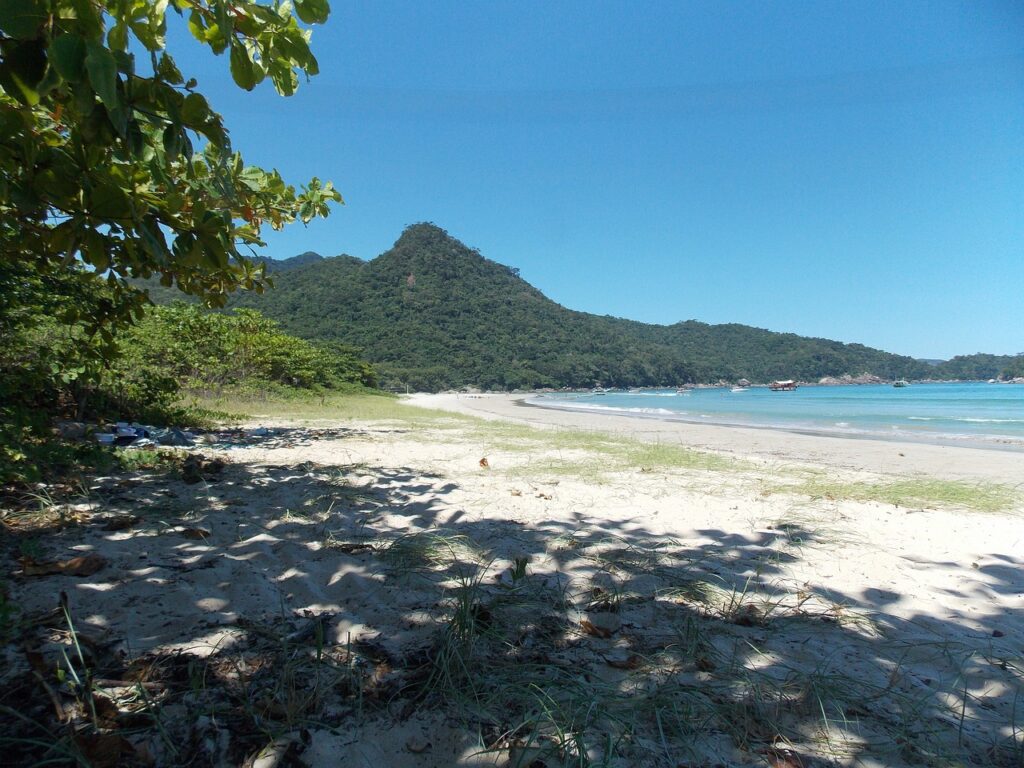
How big is Ilha Grande
The island covers roughly 193 km², making it the largest island in Rio de Janeiro state, and it holds 86 beaches. It measures around 30 km end to end.
Most of that surface is protected — state park and biological reserve — and the population, spread across Abraão and the small caiçara villages, is only a few thousand. That ratio of forest to people is why the island still looks like this, and it’s a large part of what Ilha Grande is known for.
Is Ilha Grande safe?
Yes. It’s one of the calmest places in Rio de Janeiro state. There are no cars, the population is small, everybody knows everybody, and walking back to your pousada after dinner in Abraão is entirely normal.
The real risks here aren’t criminal, they’re practical:
- The trails. This is where visitors actually get into trouble. Take a guide on the long routes, start early, carry water, and don’t set off in the afternoon hoping to be back before dark. Night falls fast in the forest.
- The sea. The ocean-facing beaches — Lopes Mendes, Aventureiro, Parnaioca, Dois Rios — have real waves and currents, and no lifeguards.
- Medical care. There’s a basic health post in Abraão and nothing more. Anything serious means a boat to the mainland. Bring the medication you need.
- Cash. ATMs are scarce and unreliable, and card machines depend on the signal. Arrive with money.
- Insects. The sandflies on some beaches are enthusiastic. Repellent, applied more often than you’d like.
Ordinary common sense covers the rest: don’t leave valuables on the sand, and keep an eye on your bag on a crowded boat.
See Ilha Grande with Rio Cultural Secrets
So why not do the whole thing properly, without the logistics landing on you?
We run a private day trip to Ilha Grande from Rio with a private speed boat, reserved for your group alone. Twelve hours, door to door: private transportation from your hotel in Rio, an exclusive driver-guide with you for the whole day, and your own boat waiting at the pier. Six stops along the coast, including Lagoa Azul, chosen with you rather than fixed in advance.
A speed boat covers far more ground than a schooner in a single day, which is what makes the trip work from Rio. You’ll reach the coves the crowded tour boats pass by, swim where nobody else is, and skip the queues entirely.
Book now and let us make your Ilha Grande trip real.
