


Vista Chinesa Rio de Janeiro
Nestled within the lush expanse of Rio de Janeiro’s Tijuca Forest lies a treasure trove where the mystique of China meets the awe-inspiring beauty of Brazil. Welcome to Vista Chinesa, or “Chinese View,” – a sanctuary that beautifully intertwines cultural richness with breathtaking panoramas. Join us on a journey through time as we delve into history, savor tea traditions, admire architectural wonders, and immerse ourselves in unparalleled natural grandeur.
In This Article
ToggleVista Chinesa Rio: A Look into Its History
Vista Chinesa’s origins date back to the early 20th century, when it was built between 1902 and 1906 as a tribute to Chinese culture and the introduction of tea cultivation in Brazil. The construction process involved a series of decisions by city officials to honor the influence of Chinese immigrants and enhance the Tijuca Forest with a culturally significant monument. This pavilion was built to commemorate the Chinese immigrants who introduced tea cultivation to Brazil, an effort that ultimately failed as coffee became the country’s dominant crop. Vista Chinesa stands at 380 meters and is recognized as the largest Chinese-style monument in Latin America. It is also celebrated as the largest tribute to China in Latin America. It has been awarded as the best Chinese portal outside of China, highlighting its cultural significance beyond its home country. Vista Chinesa gained international fame after being featured as a landmark in the animated movie Rio.
![Vista Chinesa Rio de Janeiro [7] vista chinesa rio de janeiro tijuca forest vista chinesa rio de janeiro tijuca forest](https://i0.wp.com/www.rioculturalsecrets.com/wp-content/uploads/2024/03/vista-chinesa-rio-de-janeiro-tijuca-forest.jpg?resize=1024%2C768&ssl=1)
Location and National Park Setting
Nestled in the heart of Rio de Janeiro’s lush green expanse, Vista Chinesa is perfectly positioned within the Tijuca National Park, in the tranquil Alto da Boa Vista neighborhood. This iconic Chinese portal sits along the scenic Estrada da Vista Chinesa, a winding road that invites adventurers and casual visitors alike to ascend through the vibrant Tijuca Forest. The journey itself is part of the experience. Whether you’re driving, cycling, or hiking, the route offers glimpses of native flora and the soothing sounds of nature, making every moment memorable.
The monument’s proximity to the Botanical Garden makes it an accessible destination for those looking to combine cultural exploration with natural beauty. The paved road leading to the gazebo is suitable for cars and bicycles, ensuring that visitors of all ages and abilities can enjoy the adventure. As you approach the Chinese belvedere, the city of Rio unfolds beneath you, connecting the urban landscape with the serenity of the national park. This harmonious blend of culture and nature is what makes Vista Chinesa a standout attraction in Brazil, drawing visitors from around the world to experience its unique charm.
Embracing Tea and Chinese Heritage
As you ascend towards Vista Chinesa, the air becomes infused with the aroma of freshly brewed tea. Tea, deeply ingrained in Chinese culture, takes center stage in this experience. Guests are cordially invited to partake in traditional Chinese tea ceremonies, where they can relish the nuanced flavors amidst a serene ambiance. It’s an opportunity to pause, reflect, and connect with the natural environment and the cultural heritage that imbues the landscape.
![Vista Chinesa Rio de Janeiro [8] instagram tour rio vista chinesa panoramic Instagram tour Rio de Janeiro at Vista Chinesa Chinese View pavilion overlooking tropical forest canopy with panoramic views of Rodrigo de Freitas Lagoon and Ipanema](https://i0.wp.com/www.rioculturalsecrets.com/wp-content/uploads/2025/11/instagram-tour-rio-vista-chinesa-panoramic.jpg?resize=1024%2C1024&ssl=1)
The Enigmatic Vista Chinesa Pagoda House
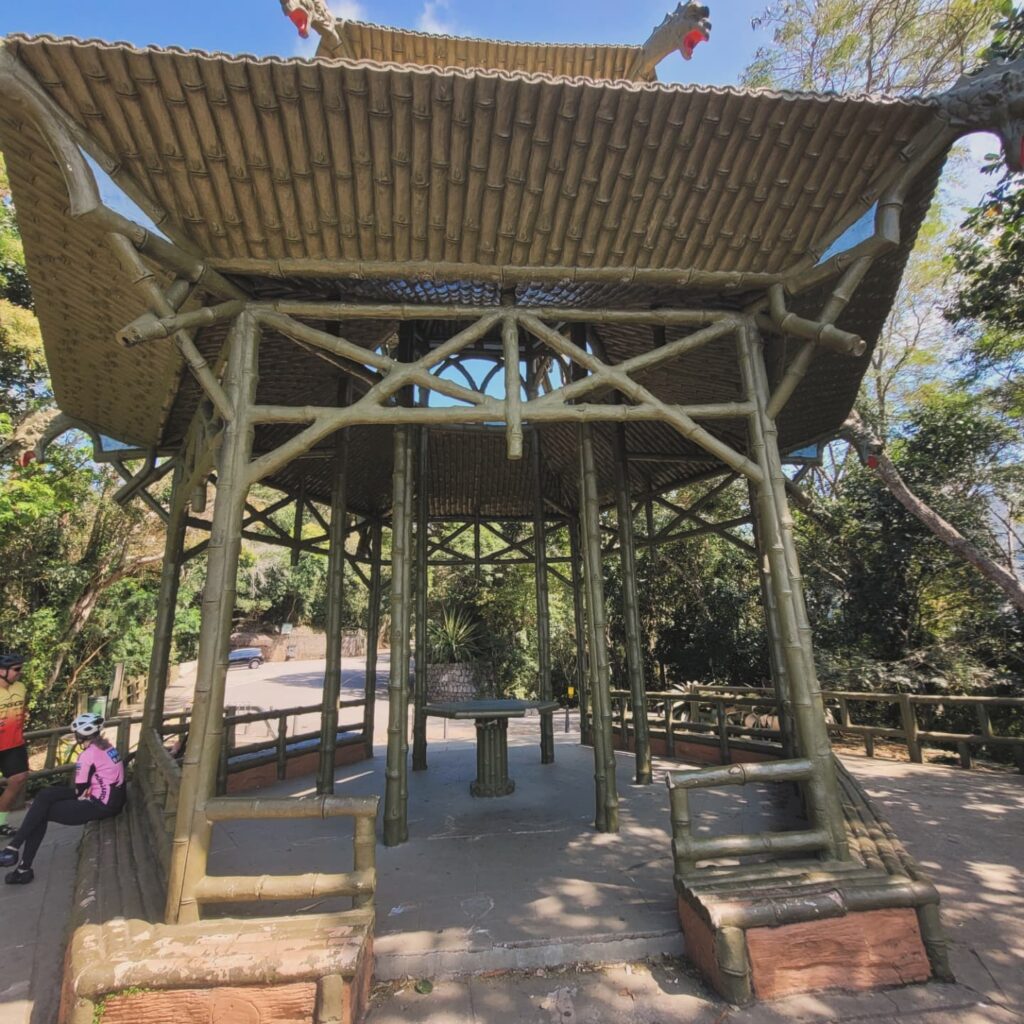
Nestled at the heart of Vista Chinesa stands the illustrious Pagoda House – a remarkable structure built using traditional materials such as bamboo and cement, showcasing an authentic Chinese architectural style. Adorned with intricate carvings and vibrant hues, this structure serves as a cultural landmark and a vantage point within Rio de Janeiro, beckoning visitors seeking solace from the sun or simply yearning to bask in its splendor. Step inside, and you’re transported to a bygone era through ornate tapestries and exquisite furnishings, evoking the essence of ancient China. The pavilion features a raised ceiling, which enhances airflow and allows more light to enter the space.
Conservation Efforts and Environmental Importance
Tijuca National Park, home to Vista Chinesa, stands as a testament to Rio de Janeiro’s commitment to environmental stewardship and offers access to hiking tours in the Tijuca Rainforest, with caves and waterfalls, for those seeking a deeper nature experience. As one of the largest urban forests on the planet, the park shelters a remarkable diversity of plant and animal life, including rare and endangered species that rely on this protected habitat. The park’s dense canopy also plays a crucial role in maintaining the city’s water supply, acting as a vital watershed for Rio and its surrounding communities.
Conservation initiatives within the national park focus on preserving the delicate balance of its ecosystem, safeguarding wildlife, and fostering sustainable tourism. Vista Chinesa, as a beloved monument and gathering place, helps raise awareness about the importance of protecting these natural treasures. Visitors are encouraged to follow park guidelines—such as staying on marked trails, refraining from feeding wildlife, and carrying out all litter—to ensure the area remains pristine for future generations.
By choosing to visit Vista Chinesa and the Tijuca National Park, travelers not only enjoy breathtaking views and a rich cultural experience but also contribute to ongoing conservation efforts, especially when joining wildlife-focused tours through Tijuca Forest and Pantanal Carioca. For those planning their adventure, the official Tijuca National Park website offers up-to-date information, tips for responsible visits, and details on how to support local environmental initiatives. Embracing these practices ensures that the beauty and biodiversity of this remarkable national park will continue to inspire and delight all who come to explore its wonders.
![Vista Chinesa Rio de Janeiro [9] vista chinesa rio de janeiro chinese view vista chinesa rio de janeiro chinese view](https://i0.wp.com/www.rioculturalsecrets.com/wp-content/uploads/2024/03/vista-chinesa-rio-de-janeiro-chinese-view.jpg?resize=1024%2C682&ssl=1)
Mesmerizing Views
However, the crowning jewel of Vista Chinesa lies in the panoramic vistas it unveils. Perched in the middle of the Tijuca Forest, visitors are treated to sweeping panoramas that capture Rio de Janeiro’s iconic skyline, verdant mountains, and glistening coastline, which many explore further on private guided tours of the forest and the Botanical Garden. From this elevated vantage point, you can look out and spot landmarks such as Christ the Redeemer, Sugarloaf Mountain, Ipanema Beach, Rodrigo de Freitas Lagoon, and Two Brothers Hill (Morro Dois Irmãos), also known as Brothers Hill, making it renowned as a premier viewpoint for seeing Corcovado and Ipanema Beach. It’s common during peak time for visitors to wait a few minutes to take photos at the viewpoint, as everyone wants to capture the spectacular scene they’ve just spotted. It’s a spectacle that lingers in memory, enticing visitors to immerse themselves in the boundless beauty around them.
Getting There
Embarking on the journey to Vista Chinesa is an adventure unto itself. Visitors can reach Vista Chinesa via a steep, paved road through the Alto da Boa Vista neighborhood, arriving by car, bicycle, or on foot. The road is popular with cyclists and hikers, and the journey may take several minutes depending on your chosen route. If you prefer a more active approach, there is a well-marked trail starting at Parque Lage—a 9-kilometer steep climb that requires physical preparation. Public transportation is also available, with visitors taking bus 409 to Rua Pacheco Leão, then walking 4.5 kilometers uphill to the viewpoint.
Access to Vista Chinesa may be restricted on weekends or for certain tours, so it’s important to plan your visit and go during daylight hours when police patrols are present for safety. If you’re considering guided tours, several companies offer jeep tours through Tijuca Forest and to Vista Chinesa, as well as private guided tours of Rio de Janeiro with expert local guides. The pavilion itself has no public toilets or water fountains, so taking your own water and snacks is essential. Please avoid feeding the local wildlife, including monkeys (micos) and toucans, to help preserve the park’s diverse ecosystem of tropical vegetation and animals; those interested in fauna should opt for specialized wildlife tours in Rio de Janeiro that follow responsible viewing practices.
For a safer and more enjoyable experience, visit with friends or a guide, especially if you’re exploring the trail or cycling, or consider a 4–5 hour private Rio sightseeing tour that includes key viewpoints and neighborhoods. Many prefer the paved road for its convenience, but the trail offers a rewarding challenge for those seeking adventure. Always plan, take care on the steep paths, and read additional resources or park rules before your visit for more information, especially if you’re pairing Vista Chinesa with a full-day 11-hour tour of Rio’s best sights.
Whether drawn by the allure of Chinese heritage, the promise of unparalleled vistas, or simply the desire to escape the urban hustle and bustle, Vista Chinesa offers an experience that transcends expectations and pairs perfectly with the discovery of hidden gems and lesser-known attractions across Rio de Janeiro. So come, sip tea, delve into ancient traditions, and surrender to the magnificence that awaits atop this mystical mountaintop sanctuary.

![Corcovado Train (Trem do Corcovado) [2] corcovado train rio de janeiro brazil corcovado train rio de janeiro brazil](https://i0.wp.com/www.rioculturalsecrets.com/wp-content/uploads/2025/03/corcovado-train-rio-de-janeiro-brazil.jpg?resize=1230%2C820&ssl=1)
![Mirante Dona Marta Rio de Janeiro [3] dona marta top view dona marta top view](https://i0.wp.com/www.rioculturalsecrets.com/wp-content/uploads/2024/04/dona-marta-top-view.jpg?resize=1230%2C820&ssl=1)
![Lage Park Rio de Janeiro [4] rio de janeiro lage park rio de janeiro lage park](https://i0.wp.com/www.rioculturalsecrets.com/wp-content/uploads/2024/03/rio-de-janeiro-lage-park.jpg?resize=1230%2C919&ssl=1)
![Hang Gliding Rio de Janeiro [5] sao conrado rio in 5 days sao conrado rio in 5 days](https://i0.wp.com/www.rioculturalsecrets.com/wp-content/uploads/2023/04/sao-conrado-rio-in-5-days.jpg?resize=1230%2C820&ssl=1)
![Travel Guide Tijuca Forest - Best Rainforest Tours with a Local [6] pedra bonita hike rio pedra bonita hike rio](https://i0.wp.com/www.rioculturalsecrets.com/wp-content/uploads/2021/12/pedra-bonita-hike-rio.jpg?resize=960%2C540&ssl=1)