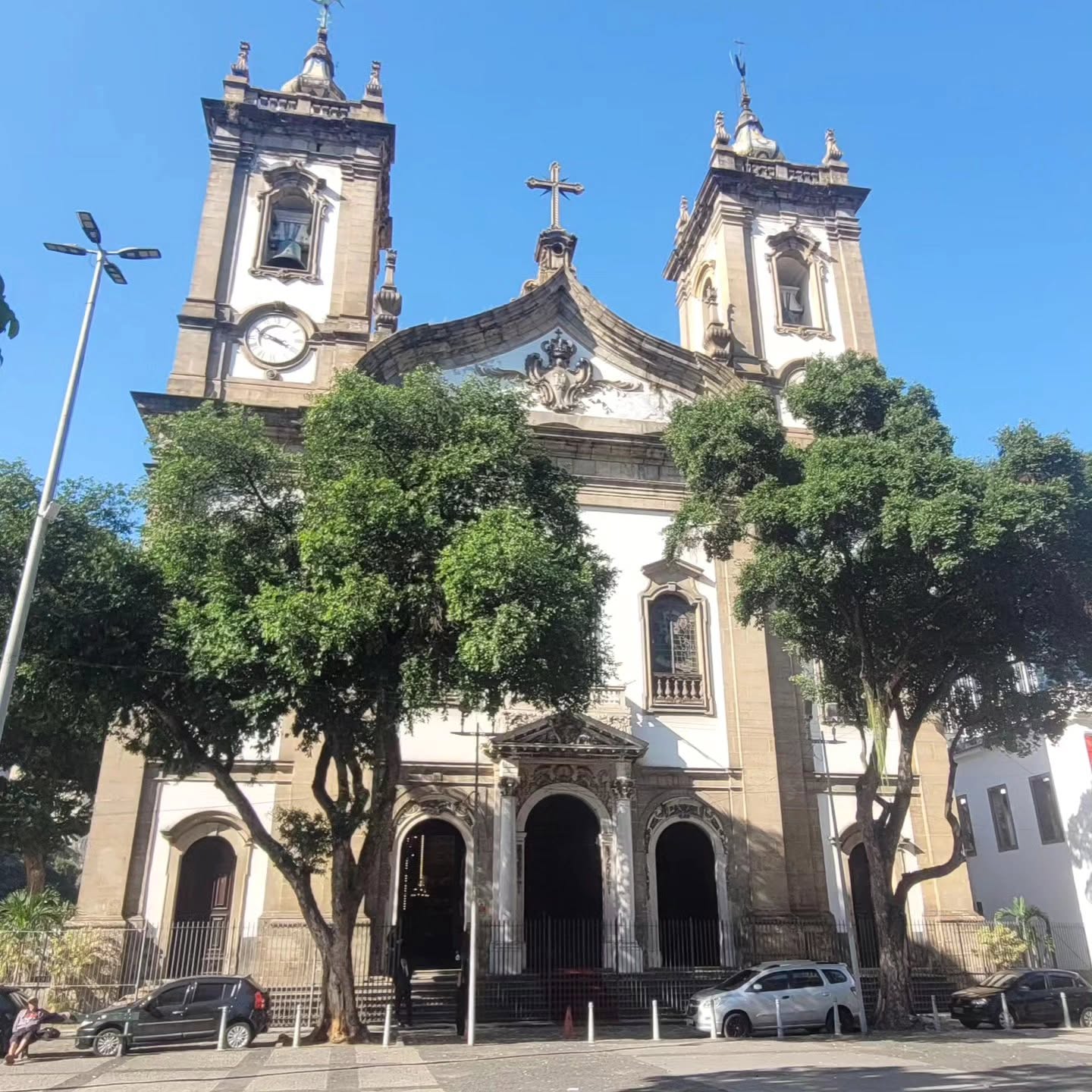



May 12, 2026

Landmarks in Rio de Janeiro: From Iconic Views to Hidden Histories
Key Takeaways
- Rio de Janeiro earns its title of cidade maravilhosa (marvelous city) through a dramatic geography where granite peaks rise directly from Guanabara Bay, Atlantic rainforest blankets urban slopes, and over 20 kilometers of beaches curve along the South Zone coastline.
- The most famous landmarks that draw most visitors—Christ the Redeemer, Sugarloaf Mountain (Pão de Açúcar), Copacabana Beach, and Ipanema Beach—combine natural wonders with sites that reveal centuries of colonial history and Afro-Brazilian resilience.
- Beyond postcard views, Rio’s must-see sites include UNESCO World Heritage locations like the Valongo Wharf, where nearly one million enslaved Africans arrived between 1811 and 1831, and Maracanã Stadium, the spiritual home of Brazilian football culture.
- Practical planning matters: allocate 4-6 hours per major site, visit during shoulder seasons (March-May or September-November) for manageable crowds, and consider early morning or late afternoon timing to avoid midday heat and fog.
- Many landmarks reward visitors who explore with knowledgeable local guides rather than crowded tour buses, especially for sites where historical context—from the colonial period to the modern Olympic revival—transforms a photo stop into genuine understanding.
Introduction: Why Rio de Janeiro’s Landmarks Matter
Nestled between Guanabara Bay and the Serra do Mar mountains, Rio de Janeiro occupies one of the most dramatic urban landscapes on earth. The entire city spreads across 1,200 square kilometers where granite monoliths pierce the skyline, Atlantic rainforest clings to steep slopes, and golden beaches frame a bay that Portuguese explorers mistook for a river mouth in January 1500—hence the name Rio de Janeiro, or “River of January.”
This geography explains why Rio earned its nickname, cidade maravilhosa, the marvelous city. Unlike São Paulo’s industrial flatness or Salvador’s colonial density, Rio presents a triad of mountain, ocean, and forest that has awed travelers since the 19th century. Rio de Janeiro’s landscape is recognized as a UNESCO World Heritage site for its fusion of nature and urban culture. This designation acknowledges both the raw beauty and the human ambition woven into every viewpoint.
When we speak of landmarks in Rio de Janeiro, we mean far more than statues and monuments. The term encompasses natural viewpoints such as the 396-meter granite dome of Sugarloaf Mountain. These beaches have defined global beach culture for a century, colonial and imperial buildings where Brazilian history was written, modern museums designed by world-renowned architects, and football stadiums where national identity finds its loudest expression. This article focuses specifically on the municipality of Rio de Janeiro and its immediate surroundings in Rio de Janeiro state, with notes on worthwhile side trips to places like Niterói and the coffee valleys beyond.
What follows is a practical guide to what each landmark reveals about Rio’s history and culture. You will find concrete advice on when to go, how long to allow, and which combinations make sense—whether you have three days or a full week to explore South America’s photogenic metropolis.

Christ the Redeemer: Symbol of the Marvelous City
Perched atop 710-meter Corcovado Mountain, the figure of Christ with arms outstretched has defined Rio de Janeiro’s skyline since 1931. Christ the Redeemer, an Art Deco statue completed in 1931, is one of the New Seven Wonders of the Modern World and was designated a UNESCO World Heritage Site in 2012. The redeemer statue stands 30 meters tall (92 feet without the pedestal) and weighs 1,145 tons of reinforced concrete, engineered by French technicians over a decade of construction.
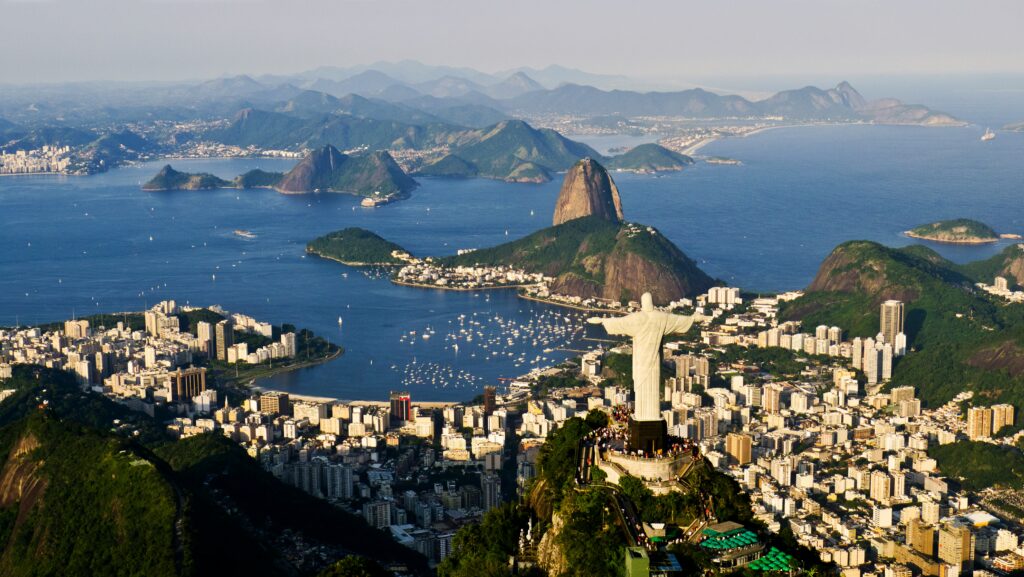
The views from the summit justify every superlative. To the east, Guanabara Bay opens toward Niterói and the Atlantic. South, the white crescents of Copacabana Beach and Ipanema Beach trace the coastline. West, the 8-square-kilometer Lagoa Rodrigo de Freitas reflects the sky. And in every direction, the dense canopy of Tijuca National Park cascades down the mountainside—a reminder that this is a rainforest city. Christ the Redeemer, a 92-foot (28-meter) tall statue, is one of the New Seven Wonders of the Modern World and attracts over 2 million visitors each year.
Getting There
Three main access routes lead to the summit:
- Corcovado Rack Railway: The historic train departs from Cosme Velho station, climbing 3.9 kilometers through the Tijuca forest in roughly 20 minutes. Operating since 1882, the railway handles about 400 passengers per hour and costs R$100-150 round-trip. Book in advance during high season.
- Official Vans: Departing from Largo do Machado or Copacabana, vans take 20-30 minutes and cost approximately R$50. They drop visitors at the same arrival area as the train.
- Hiking from Parque Lage: A steep 4-kilometer trail through the forest takes 2-3 hours for fit hikers. The route is free but exposes trekkers to occasional robbery incidents—going with a guide is strongly recommended.
Visiting Tips
Timing matters enormously. Early morning (8-10 am) or late afternoon (4-6 pm) on weekdays offers the best combination of light, manageable crowds, and clearer skies. Corcovado Mountain experiences fog and cloud cover roughly 40% of the time, so checking webcams and weather forecasts before departure saves disappointment. The summit includes a small chapel (often cited as one of the world’s smallest), a café, and no strict time limits once you arrive.
Be aware that pickpocketing affects approximately 10% of visitors according to tourism advisories. Keep valuables secured and cameras strapped. Lightning storms occur frequently during RioRio’s rainy days per year, so watch for darkening skies.

Sugarloaf Mountain (Pão de Açúcar) and the Iconic Cable Car
If Christ the Redeemer provides RioRio’s spiritual silhouette, Sugarloaf Mountain delivers its geological drama. This 396-meter granite dome guards the entrance to Guanabara Bay, formed 600 million years ago through tectonic uplift. The Portuguese named it Pão de Açúcar for its resemblance to the conical clay molds used to refine sugar—a reminder that the colonial economy shaped how Europeans saw this landscape.
Sugarloaf Mountain, or Pão de Açúcar, rises 1,299 feet above Guanabara Bay and offers breathtaking views of the city, accessible via a scenic cable car ride. The two-stage system, inaugurated in 1912, was South America’s first cable car and remains one of the world’s most scenic aerial journeys. Sugarloaf Mountain, known as Pão de Açúcar, is a popular attraction that receives approximately 1.5 million visitors annually and offers stunning views of Rio de Janeiro.
The Cable Car Experience
The journey unfolds in two stages:
- Stage One: Glass-walled gondolas depart from Praia Vermelha at sea level, rising 220 meters to Morro da Urca in about 6 minutes. Each gondola carries 75 passengers and departs every 10-20 minutes from 8 am to 10 pm.
- Stage Two: From Morro da Urca, a second cable car climbs another 176 meters to the Sugarloaf summit, completing the journey in 6 minutes.
Tickets cost R$120-160 and can be purchased at the station or booked online through oficialpao.com.br—essential during holidays and weekends when lines stretch for hours.
When to Visit
Sunset transforms the experience. Between 6-7 pm, golden light turns Guanabara Bay into hammered copper while the lights of Copacabana and the city begin to twinkle. Book sunset slots at least two weeks ahead. Sunrise tours (departing around 6 am) have grown in popularity but command a premium pricing of around R$200.
Facilities and Viewpoints
Both Morro da Urca and the summit offer restaurants, bars, and short walking trails. The Belvedere restaurant serves bay seafood with panoramic views (expect R$80 per plate). A 1-kilometer loop trail on Morro da Urca passes through Atlantic forest inhabited by marmosets and occasional ocelots. Adventurous visitors can arrange via ferrata climbing routes or opt for private Sugarloaf Mountain cable car experiences that add historical context and flexibility.
Best viewpoints face:
- Northeast toward the Cristo statue on Corcovado
- South across Copacabana’s curved beachfront
- Easy to Niterói and Oscar Niemeyer’s flying-saucer museum
The area has been protected since 1910, but increasing visitor numbers—up 2% annually—pose erosion challenges that conservation managers continue to address.
Beaches That Define Rio: Copacabana and Ipanema
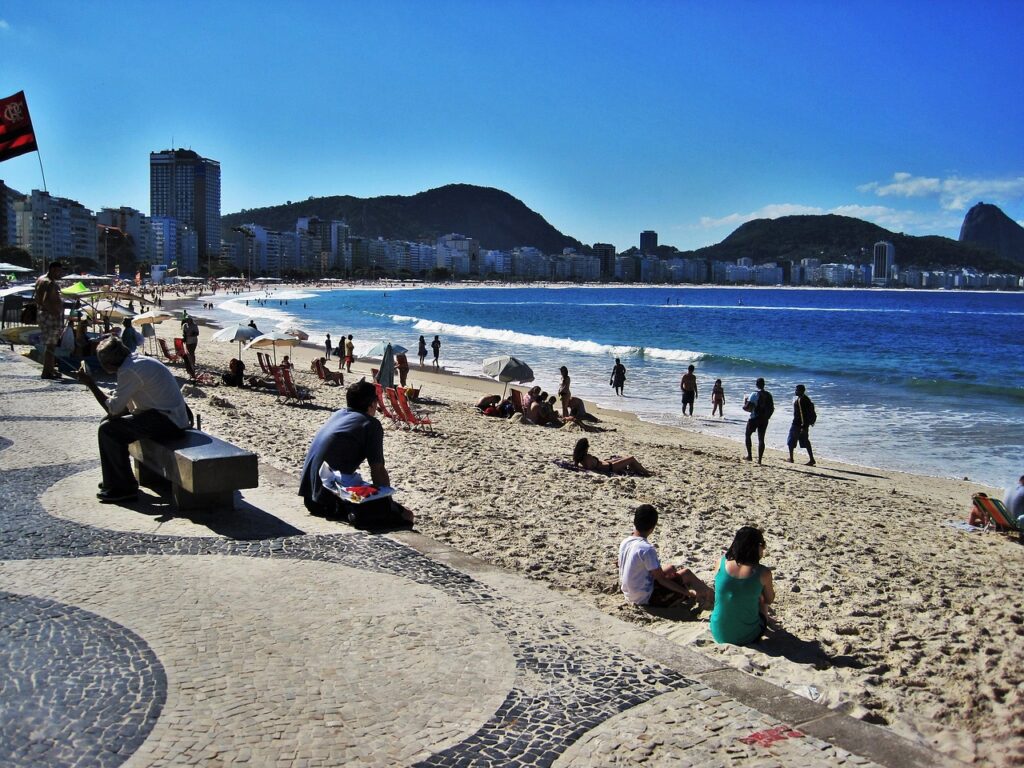
No discussion of landmarks in Rio de Janeiro is complete without its beaches. These are not merely places to swim—they are open-air theaters where carioca life performs daily. Copacabana Beach is a 2.5-mile-wide (4 km) arc of sand, one of the world’s most famous beaches, known for its vibrant atmosphere and iconic black-and-white wave-patterned mosaic promenade.
Copacabana Beach: Classic Rio
Developed between the 1930s and 1960s under visionary urban planners, Copacabana became synonymous with glamour, casinos, and bossa nova cool. The 4-kilometer crescent frames a cityscape of Art Deco apartment buildings and the legendary Copacabana Palace hotel. Roberto Burle Marx’s famous Portuguese-style wave mosaic—37,000 square meters of black-and-white stone undulating along the promenade—was restored in 2024 and remains one of the most photographed sidewalks on earth.
The beach hosts extraordinary gatherings. For detailed advice on where to stay, eat, and celebrate, many travelers consult an in-depth guide to the Copacabana neighborhood. New Year’s Eve brings 3-4 million revelers for fireworks over the Atlantic. The annual Festa de Iemanjá honors Afro-Brazilian religions with offerings to the Queen of the Sea. On ordinary days, watch beach football, and volleyball played to professional standards, or join the endless parade of joggers, cyclists, and vendors selling everything from caipirinhas to grilled shrimp.
Both Copacabana and Ipanema beaches are popular for sunbathing, swimming, and socializing, with beach volleyball and food vendors along the shore.
Ipanema Beach: Bohemian and Beautiful
Adjacent to Copacabana but separated by the rocky point of Arpoador, Ipanema Beach carries a different energy. Ipanema Beach, located next to Copacabana, is known for its younger, more LGBTQ-friendly vibe and hosts the annual Iemanja Festival to honor the Queen of the Sea. This is where the 1962 bossa nova classic “The Girl from Ipanema” was composed, capturing the neighborhood’s enduring association with beauty, music, and sophistication.
The beach organizes itself by “”ostos””(numbered lifeguard stations), each attracting distinct crowds:
- Posto 9: LGBTQ epicenter, Sunday Funk Balls, progressive politics
- Posto 10: Fashion models, photographers, beautiful people
- Arpoador: Surfers catching 2-3 meter waves against the Dois Irmãos rocks
Sunset views from Arpoador draw crowds of 1,000 nightly during the summer months. Many cariocas consider this the finest sunset in the city.
Practical Beach Advice
- Safety: Daytime visits are safest. Crime drops significantly after dark along well-lit, police-patrolled stretches, but avoid empty sections after 6 pm.
- Valuables: Leave expensive items at your accommodation. Beach thefts affect roughly 20% of visitors according to 2025 survey data. Bring cash in small amounts for kiosk purchases.
- Chairs and Umbrellas: Rent through the official “each boy” for approximately R$20.
- Surfing: Lessons at Arpoador cost around R$150/hour—a sunny day at Arpoador with waves is unforgettable.
- Leme Beach: At Copacabana’s quieter eastern end, Leme Beach offers calmer waters and Leme Fort, an early 20th-century military installation with a beautiful view of the coastline.
Tijuca National Park: Rainforest in the City
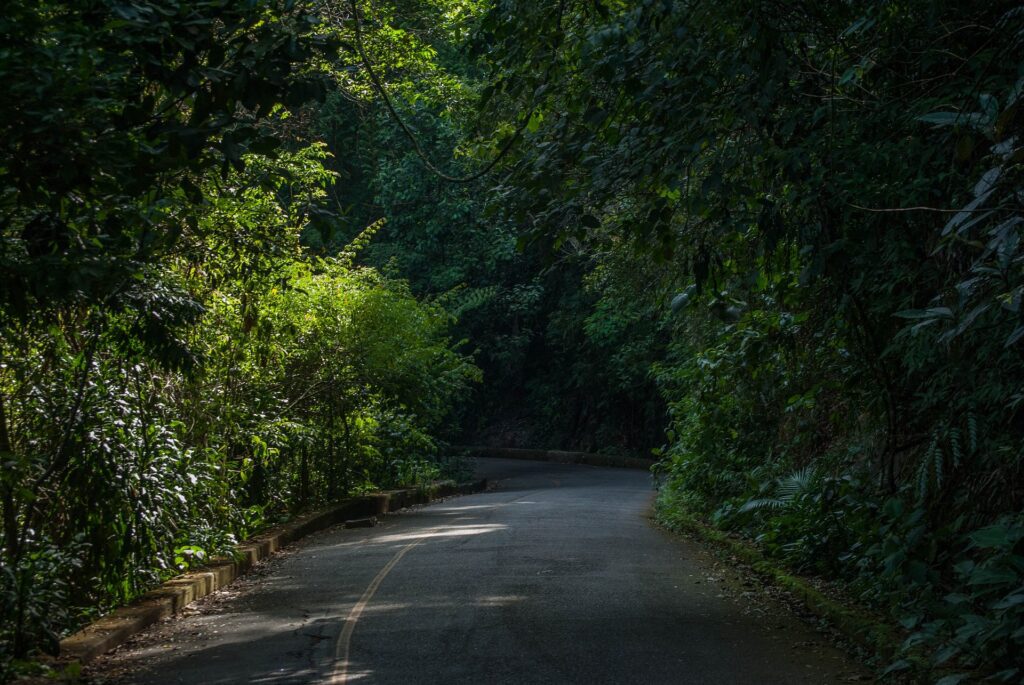
Rising directly behind Rio’s South Zone and Centro districts, Tijuca National Park represents one of the world’s great urban conservation stories. Tijuca National Park, covering over 15 square miles, is the largest urban forest in the world and features dense Atlantic rainforest, hidden waterfalls, and misty peaks, just minutes from Rio’s city center. Guided Tijuca Forest tours with local experts help visitors navigate its trails safely while learning about the history of reforestation.
The forest you see today is largely artificial—in the best possible sense. By the 1850s, coffee plantations and slave labor had stripped 90% of the original Atlantic rainforest from these slopes, threatening Rio’s water supply. Beginning in 1861, Major Manuel Gomes Archer led a massive replanting effort, setting 73,000 seedlings into the denuded hillsides. The project continued for two decades and created what visitors now experience as a wild jungle.
Key Sites Within the Park
Pico da Tijuca: At 1,021 meters, this is Rio’s highest point. A 6-kilometer trail climbs through dense vegetation to incredible views over the entire city—from the bay to the beaches to the distant Serra do Mar. Allow 4-5 hours round-trip.
Vista Chinesa: This Chinese-style pagoda belvedere sits at 396 meters and offers a privileged view over the South Zone, Lagoa, and Corcovado. Accessible by car, it makes an easy addition to a Christ the Redeemer visit.
Cascatinha Taunay: A 50-meter waterfall reached via a gentle 1.5-kilometer trail. The approach passes through stands of bamboo and tropical hardwoods, with frequent monkey sightings.
Mayrink Chapel: A restored 19th-century pink-facade chapel set within the forest, offering a surprising counterpoint to the surrounding wilderness.
Suggested Short Hikes
- Bom Retiro Loop: 2 kilometers, 1 hour, passing multiple small waterfalls and marmoset colonies
- Pedra Bonita Trail: 5 kilometers to a famous hang-gliding launch point—expert hikers only
- Parque Lage to Christ the Redeemer: 4 kilometers, 2-3 hours, steep but rewarding
Safety and Planning
Go with a guide or group on longer trails. Robbery incidents affect approximately 15% of solo hikers, according to ICMBio park reports. Trails become muddy and slippery after rain—Rio receives about 200mm monthly during the wet season. The national park charges R$20 per vehicle and opens 8 am-5 pm.
Eco-tours have increased 25% since 2020, reflecting growing interest in sustainable travel experiences that move beyond beaches and viewpoints.

Historic and Cultural Landmarks from the Colonial Period to Today
Downtown Rio and the revitalized port zone concentrate centuries of history within walking distance. These neighborhoods witnessed Portuguese colonial rule, the extraordinary transfer of the royal court from Lisbon in 1808, the brutal economics of slavery, and Brazil’s transformation from empire to republic.
Paço Imperial
The Paço Imperial, built in the 18th century, is a historic landmark in Rio de Janeiro that once served as the residence of Portuguese royalty and is an example of neoclassical architecture. Located on Praça XV de Novembro (named for the date Brazil declared its republic in 1889), this arcaded palace became the center of Portuguese imperial power when Dom João VI fled Napoleon’s invasion and transferred his entire court across the Atlantic.
The Paço Imperial, an 18th-century palace in Rio de Janeiro, was once home to Portuguese royalty and now hosts art exhibitions and cultural events, showcasing a blend of colonial heritage and contemporary art. Free exhibitions and concerts draw approximately 500,000 visitors annually through its restored salons. The square outside remains a living public space, surrounded by colonial architecture and ferries departing for Niterói, and pairs naturally with a visit to the Royal Portuguese Cabinet of Reading library, a short walk away.
Valongo Wharf (Cais do Valongo)
Cais do Valongo is an archaeological site recognized as a UNESCO World Heritage site, serving as the main landing point for enslaved Africans in South America. Between 1811 and 1831, nearly one million people arrived here in chains—Rio received approximately 40% of the 4.9 million Africans forcibly transported to Brazil.
Rediscovered during metro construction in 2011, the 15-meter cobblestone quay and stone arch were designated a UNESCO World Heritage Site in 2017. Walking these stones is an act of remembrance and an essential part of understanding how deeply African culture shaped everything that makes Rio extraordinary—from samba rhythms to capoeira movements to the city’s vibrant street life. The site is located at Rua Sacadura Cabral in the port zone.
Municipal Theater and Cinelândia
The Municipal Theater of Rio de Janeiro, inspired by the Paris Opera House, is a prime example of Belle Époque architecture and features opulent interiors with marble staircases and crystal chandeliers. Completed between 1909 and 1914, the 2,000-seat theater represents Rio’s ambition to rival European cultural capitals during the early republic.
The surrounding Cinelândia district once held over 20 cinema palaces during the 1950s golden age. Though many have closed, the neighborhood retains its grand boulevards and early 20th-century facades.
The Carioca Aqueduct and Santa Teresa
The Carioca Aqueduct, built in the mid-18th century, was originally designed to transport fresh water and currently serves as a bridge for the Santa Teresa tram. Known locally as the Arcos da Lapa, its distinctive white arches have become symbols of Rio’s city center and the bohemian Lapa nightlife district. The vintage yellow tram crosses the arches en route to the hillside neighborhood of Santa Teresa, where cobblestone streets, artist studios, and live music venues attract visitors seeking an alternative to beach tourism.
Royal Portuguese Cabinet of Reading
The Royal Portuguese Cabinet of Reading is a 19th-century library known for its neo-Manueline architecture and vast collection of Portuguese literature, and it frequently appears in insider travel guides to Rio’s cultural landmarks. With over 350,000 volumes and a stunning skylit reading room, it ranks among the world’s most beautiful libraries—an essential stop for bibliophiles exploring Rio’s city center.
Modern Icons: Niterói Contemporary Art Museum and Museum of Tomorrow
Rio’s modern architectural landmarks provide striking counterpoints to colonial stone and imperial grandeur. Two buildings by world masters anchor opposite sides of Guanabara Bay, demonstrating that the city continues to build icons.
Niterói Contemporary Art Museum
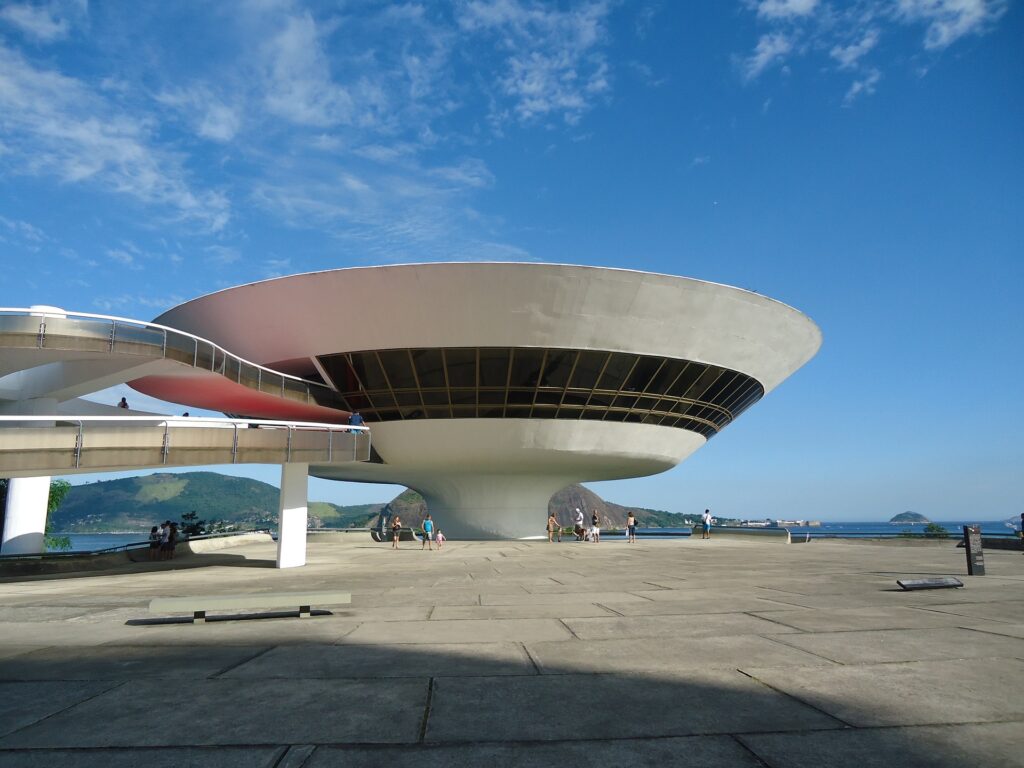
Across the bay in Niterói, the Niterói Contemporary Art Museum hovers like a white flying saucer on a 98-meter cliff. Designed by Oscar Niemeyer and completed in 1996, the 16-meter-diameter structure cost R$330 million and offers 360-degree views of the bay, Sugarloaf, and Rio’s skyline. Inside, 1,200 square meters are dedicated to mid-20th-century Brazilian art, including works by Di Cavalcanti and other modernist masters.
Getting there involves a 15-minute ferry from Praça XV to Niterói (R$7), followed by a short bus, taxi, or private transfer—the total journey from Rio is approximately 45 minutes. Consider combining the visit with a coastal walk and a sunset ferry back, watching the bay bridges light up against the darkening sky.
Museum of Tomorrow (Museu do Amanhã)
The Museu do Amanhã, or Museum of Tomorrow, is a modern science museum in Rio de Janeiro that focuses on sustainability and the future of humanity, featuring a striking architectural design by Santiago Calatrava. Opened in 2015 on Praça Mauá, the 18,000-square-meter structure extends into the bay like a white spine, with 280 biomimetic solar panels that track the sun and generate 25% of the building’s energy.
Interactive exhibitions explore climate change, urbanization, and humanity’s collective future—a fitting legacy of the Rio+20 environmental summit. The museum anchored the Porto Maravilha port revitalization project ahead of the 2016 Olympics, transforming warehouses into 4 kilometers of waterfront boulevards.
Entry costs approximately R$40. Allow 2-3 hours for the exhibits and the surrounding waterfront.
Architectural Contrasts
These futuristic landmarks engage in dialogue with Rio’s colonial and imperial past. Where the Paço Imperial speaks of an 18th-century maritime empire, the Museum of Tomorrow asks what kind of world we are building next. Where Sugarloaf represents 600 million years of geological time, Niemeyer’s museum floats as if it had arrived from another planet. This juxtaposition—ancient geology, colonial history, modernist ambition—defines what makes exploring landmarks in Rio de Janeiro endlessly layered.

Football, Favelas, and Everyday Life Landmarks
Some of Rio’s most important landmarks are not monuments but living expressions of carioca culture—the rhythms of football stadiums, the colors of street art, and the communities that have shaped samba, funk, and capoeira.
Maracanã Stadium
Maracanã Stadium, known as the “Cathedral of Soccer,” was built for the 1950 FIFA World Cup and has hosted events including the 2014 World Cup finals. Originally designed to hold 200,000 spectators (the 1950 final drew a crowd that witnessed Uruguay’s legendary upset of Brazil), the stadium was renovated for the 2014 World Cup and 2016 Olympics, reducing capacity to 78,838.
Attending a football match here remains one of Rio’s most intense experiences, and broader guides to watching football in Rio help visitors understand stadium culture, rivalries, and citywide safety tips. Torcidas (fan clubs), like Flamengo’s 40-million-strong following, create 90 minutes of flares, drums, and chants that reverberate through the concrete bowl. Match tickets range from R$100 to R$300 through official channels, and sitting in family or central sections rather than behind-the-goal ultras zones makes the experience accessible even for visitors unfamiliar with the sport’s tribal dynamics.
Practical advice: arrive early, use organized match-day transfers or trusted ride-hailing, carry only essential belongings, and prepare for an atmosphere that transforms sport into something closer to religion.
Escadaria Selarón
Connecting the Lapa neighborhood to Santa Teresa, the Escadaria Selarón, or Selaron Steps, is a colorful staircase decorated with over 2,000 tiles from more than 60 countries, created by artist Jorge Selarón as a tribute to Brazilian culture. The Chilean-born artist began covering the 215 steps in the early 1990s and worked continuously until he died in 2013.
The Selaron Steps, a colorful staircase created by artist Jorge Selarón, features over 2,000 tiles from more than 60 countries and has become a famous landmark in Rio de Janeiro. Each tile carries a story—gifts from other travelers, commemorations of Brazilian icons, fragments of azulejo from abandoned colonial buildings. Visit early morning (before 9 am) to photograph the steps without crowds, or at night when the adjacent Lapa nightlife district pulses with live music from dozens of clubs and bars.
Ethical Favela Visits
RRio’shillside favelas house approximately 23% of the ccity’spopulation—over 1.5 million people in roughly 1,000 communities. These neighborhoods created samba, developed capoeira, and continue to shape Brazilian culture in ways that polished tourist districts cannot replicate.
Favela tours in Rio, such as the Santa Marta Favela Tour, provide insights into residents’ lives and the community’s culture, with a focus on responsible tourism that benefits the local population, especially when organized by private Rio tour guides focused on cultural immersion. Communities like Santa Marta (pacified in 2008, featuring its own Christ statue replica) and Vidigal (with beach access and stunning views) welcome visitors through resident-led operations. Approximately 20% of tour revenues return to community projects according to 2025 studies.
Key principles for respectful visits:
- Book only through community-approved operators, never independent “guides” who approach in tourist areas
- Ask permission before photographing favela residents
- Purchase from local businesses rather than bringing supplies from outside
- Understand that these are residential neighborhoods, not theme parks
These experiences round out an understanding of Rio beyond its famous landmarks, revealing the creativity and resilience that emerge from the city’s most challenging circumstances.
Planning Your Visit to Rio’s Famous Landmarks
Ideal Duration
Three to five days allows coverage of core landmarks—Christ the Redeemer, Sugarloaf, beaches, downtown historic sites—without exhausting yourself in the tropical heat, and a curated 3-day Rio de Janeiro private tour package can streamline this kind of itinerary. Seven or more days of open space for Tijuca National Park hikes, Niterói, and day trips in the state of Rio de Janeiro. However, visitors on tight schedules often opt for a 2-day private highlights tour of Rio to cover the essentials.
Sample Half-Day Combinations
Morning Christ + Afternoon Tijuca: Take the early Corcovado train (8 am), spend 2-3 hours at the statue and surroundings, then drive to Vista Chinesa or Cascatinha waterfall before the afternoon heat peaks.
Sunset Sugarloaf + Urca Walk: Arrive at Praia Vermelha by 4 pm, walk the beach and waterfront cafés of Urca, then ascend for golden-hour views until dark.
Downtown Walking Tour: Begin at Praça XV and Paço Imperial, walk to Valongo Wharf for historical context, continue to the Museum of Tomorrow, and finish with the Municipal Theater and Cinelândia.
Beach Day with Sunset: Spend the afternoon at Ipanema or Copacabana, then walk to Arpoador by 5:30 pm to watch the sun set behind the Dois Irmãos peaks.
Safety and Logistics
- Transport: Use Uber, 99, or official radio taxis for reliable travel between zones. A typical ride from the South Zone to Centro costs R$30-50.
- Beach safety: Stick to populated areas during daylight hours. After dark, the well-lit promenades remain active and patrolled.
- Advance tickets: Book Corcovado train and Sugarloaf cable car online during high season (December-February, Carnival) and New Year’s Eve.
- Mirante Dona Marta: Mirante Dona Marta offers stunning panoramic views of Rio de Janeiro, especially at sunrise, and is easily accessible without hiking—a less crowded alternative to Corcovado.
Best Times to Visit
Season | Conditions | Crowds | Prices |
|---|---|---|---|
Dec-Feb | 30-35°C, humid, frequent afternoon storms | Peak crowds, Carnival in Feb/Mar triples prices | Highest |
Mar-May | 25-28°C, drier, pleasant | Shoulder season, manageable | Moderate |
Jun-Aug | 20-25°C, cooler, occasional rain | Lower tourism | Lower |
Sep-Nov | 22-28°C, warming, jacarandas bloom | Shoulder season, excellent | Moderate |
Carnaval in Rio de Janeiro is a major annual celebration featuring samba parades and street parties, showcasing the city’s culture and attracting millions of visitors. If you visit during this period, expect tripled accommodation costs and site closures—but also an unforgettable spectacle. |
Taking a samba class in Rio allows visitors to engage with the local culture and learn one of Brazil’s famous dance styles, often offered in group settings for beginners. Many visitors combine landmark sightseeing with evening dance classes in Lapa.
Beyond Bus Tours
Travelers seeking deeper context on Afro-Brazilian history, colonial-era architecture, and lesser-known sites increasingly choose private or small-group guided tours over large bus excursions. A knowledgeable local guide transforms Valongo Wharf from a patch of cobblestones into a profound historical reckoning, and turns a Tijuca forest walk into an ecological lesson about 19th-century reforestation. The difference lies in conversation, not just commentary.
For a serious exploration of Rio de Janeiro’s landmarks, consider operators that specialize in cultural depth rather than checkbox tourism; one example is an 11-hour full-day private tour covering Rio’s top sights, weaving history, nature, and neighborhood life into a single narrative.
FAQ
How many major landmarks can I realistically see in one day in Rio?
Most visitors comfortably combine two major landmarks in a day—for example, Christ the Redeemer in the morning and Sugarloaf in the late afternoon—plus a beach stroll or downtown walk. Travel times between zones (South Zone to Centro to Urca) and queues for cable cars and trains often take 45-90 minutes longer than expected, especially during high season when 5,000+ daily visitors crowd Corcovado. Prioritize quality over quantity and group sites by area: Sugarloaf pairs naturally with Urca and Copacabana, while Cristo connects well with Tijuca viewpoints and Parque Lage.
Is it safe to attend a football match at Maracanã as a visitor?
Attending a match is generally safe if visitors purchase tickets through official channels, arrive 90 minutes early to navigate security, and follow the crowd flow in and out of the stadium. Family sections and central-lower tiers offer the best experience for first-timers, while areas behind the goals host ultras who stand throughout, deploy flares, and create intense atmospheres that can overwhelm newcomers. Use organized match-day transfers offered by hotels or trusted ride-hailing apps, and carry only your phone, ticket, and small amounts of cash—leave passports and cameras at your accommodation.
Are RioRio’s landmarks accessible to travelers with limited mobility?
Several key sites offer step-free access. The Sugarloaf cable car accommodates wheelchairs (80kg limit), the Museum of Tomorrow is fully accessible, and most of Copacabana’s offers ramp access and accessible restrooms. Access at Christ the Redeemer improved significantly with the 2022 renovations, which added elevators and escalators from the train arrival area to the viewing platforms. However, the 223 steps to that statue’s base remain optional. Older parts of downtown and steep neighborhoods like Santa Teresa, with their cobblestone streets, continue to pose challenges. Check Elandmark’s official website for current accessibility information and maintenance notices that may affect facilities.
What should I wear when visiting religious or historic sites in Rio?
No strict dress code applies at outdoor landmarks like Christ the Redeemer and Sugarloaf. Still, modest clothing—covered shoulders, no swimwear—is expected when entering churches, the National Museum, and certain historic interiors, such as the Municipal Theater. Light, breathable fabricsRio’s best in Rio’s humidity; comfortable walking shoes prevent ankle injuries on uneven colonial-era cobblestones; a hat and sunscreen are essential givens in the tropical sun’s intensity. Carrying a light shawl or scarf proves useful if entering churches directly after beach time. Barra da Tijuca and modern shopping areas have no particular dress requirements.
Do I need to book guided tours for Rio’s landmarks, or can I visit independently?
Many landmarks are easy to visit independently. Copacabana Beach, Ipanema Beach, Escadaria Selarón, and Flamengo Park require no planning—arrive by metro or ride-hailing, explore at your own pace. However, more complex outings reward expert company. A guided tour transforms Valongo Wharf from anonymous cobblestones into a profound encounter with transatlantic slavery. Tijuca National Park trails become safer and more ecologically interesting with a natural. Downtown, the city’s colonial churches and imperial buildings yield their stories to someone who knows which doorway to enter and which inscription to read. Decide based on your confidence, Portuguese language skills, and desire for storytelling that turns a visit into a genuine understanding rather than a list of checked boxes. Rio Cultural Secrets and similar private operators—featured in publications like Forbes for their Afro-Brazilian focus—offer exactly this depth of context.