
July 17, 2026

9 Most Beautiful Churches in Rio de Janeiro
Rio’s skyline gets all the attention, but tucked into its historic neighborhoods are some of the finest examples of Portuguese Baroque and Rococo art in the Americas. Here’s a guide to nine churches worth seeking out — each with its own story, including a few curiosities I’ve collected in 14 years of guiding that you won’t find on the plaques.
Igreja Nossa Senhora da Glória do Outeiro
Perched on a hilltop overlooking Flamengo and Guanabara Bay, this 18th-century church is famous for a floor plan almost nowhere else in the world: two interlocking octagonal prisms, designed by military engineer José Cardoso de Ramalho and completed in 1739. Inside, thousands of hand-painted 18th-century Portuguese azulejo tiles wrap the nave, chancel, and sacristy, while the altarpieces trace the transition from Rococo exuberance to Neoclassical restraint. The church became a favorite of the Portuguese royal family after 1808, and generations of Brazilian imperial children were baptized here, including Dom Pedro II.
Igreja da Ordem Terceira de São Francisco da Penitência
Hidden behind an unassuming façade atop Morro de Santo Antônio, this is often called the finest showcase of Brazilian Baroque anywhere in the country. Every surface inside is covered in gilded woodcarving, the combined work of Portuguese masters Manuel de Brito and Francisco Xavier de Brito during the early 18th century — the same Xavier de Brito who later moved to Minas Gerais and helped shape the young Aleijadinho’s craft. The ceiling holds a particular claim to fame: the “Glorification of Saint Francis,” by painter Caetano da Costa Coelho, widely considered the first painting in Brazil to use illusionistic perspective.
Igreja da Ordem Terceira de São Francisco de Paula
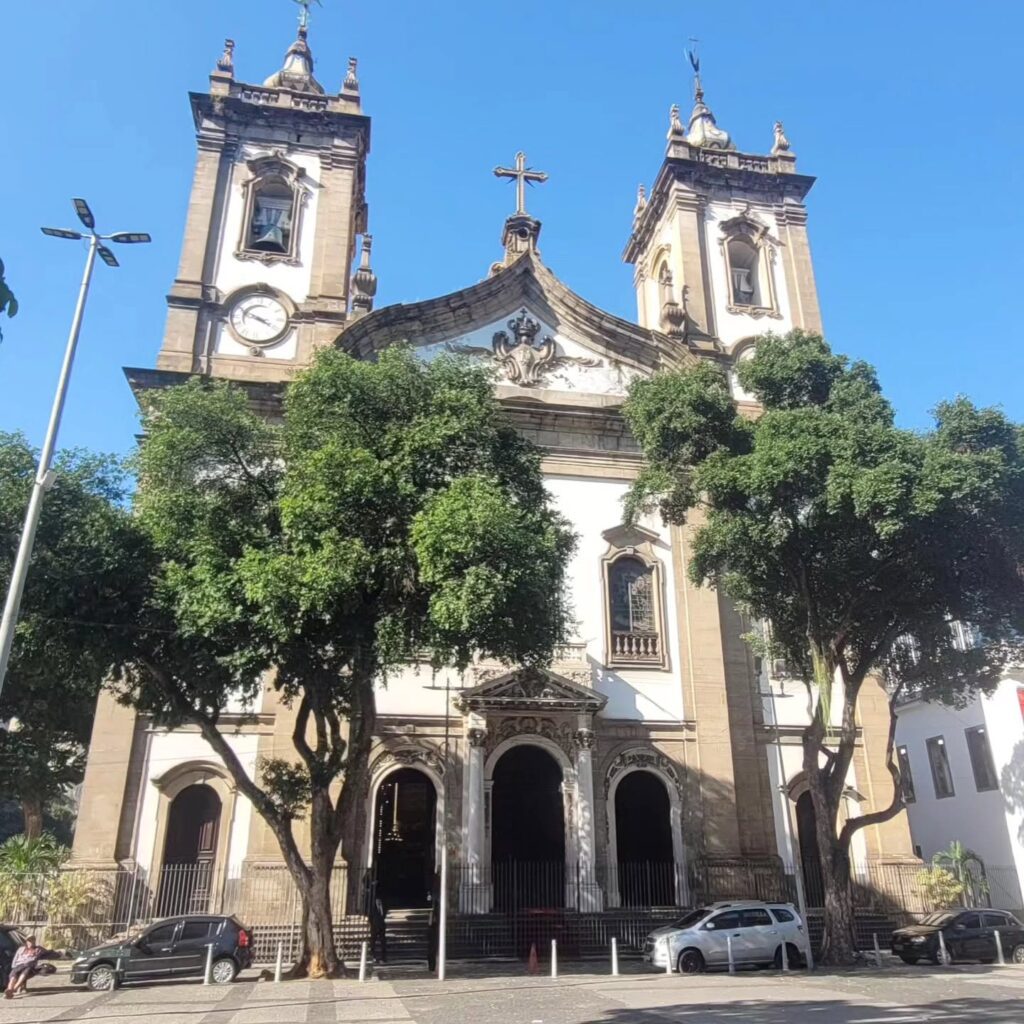
Located near Cinelândia, this church took over four decades to complete, from its 1759 cornerstone to its 1801 finish. Ten Corinthian columns line the nave, and much of the altar decoration is attributed to Mestre Valentim, one of colonial Brazil’s most celebrated sculptors. Inside the Chapel of Nossa Senhora das Vitórias, look for the paintings by Manuel da Cunha — an enslaved artist who purchased his own freedom with the money he earned from his work, a detail that adds real weight to the art on these walls.
The church has survived two fires over its history. And its bells carry a darker memory, one I always share with guests because it shouldn’t be forgotten: in the era of slavery, church bells like these served as a signal during enslaved people’s free hours — a warning that it was time to return to their masters. It’s a sobering reminder that these beautiful buildings witnessed the cruelest chapters of our history too.
Igreja Nossa Senhora do Carmo da Antiga Sé
Few buildings in Rio have witnessed as much history. This church served as the Royal Chapel when the Portuguese court arrived in 1808, hosted the coronations of both Dom Pedro I and Dom Pedro II, and functioned as Rio’s cathedral until 1976.
But perhaps the most important moment of all came before the emperors: Dom João VI arrived in Rio as prince regent and received his coronation right here — in what was then a Portuguese colony. It remains the only time in history that a European king was crowned in one of his own colonies. Think about that for a second: for a brief moment, the center of the Portuguese Empire wasn’t Lisbon. It was this street in downtown Rio.
The church also holds the mortal remains of Pedro Álvares Cabral, the navigator credited with the Portuguese arrival in Brazil. And on Saturdays, you can visit parts of the church normally closed to the public, including the verandas and exhibitions of 17th-century pieces — worth timing your visit for.
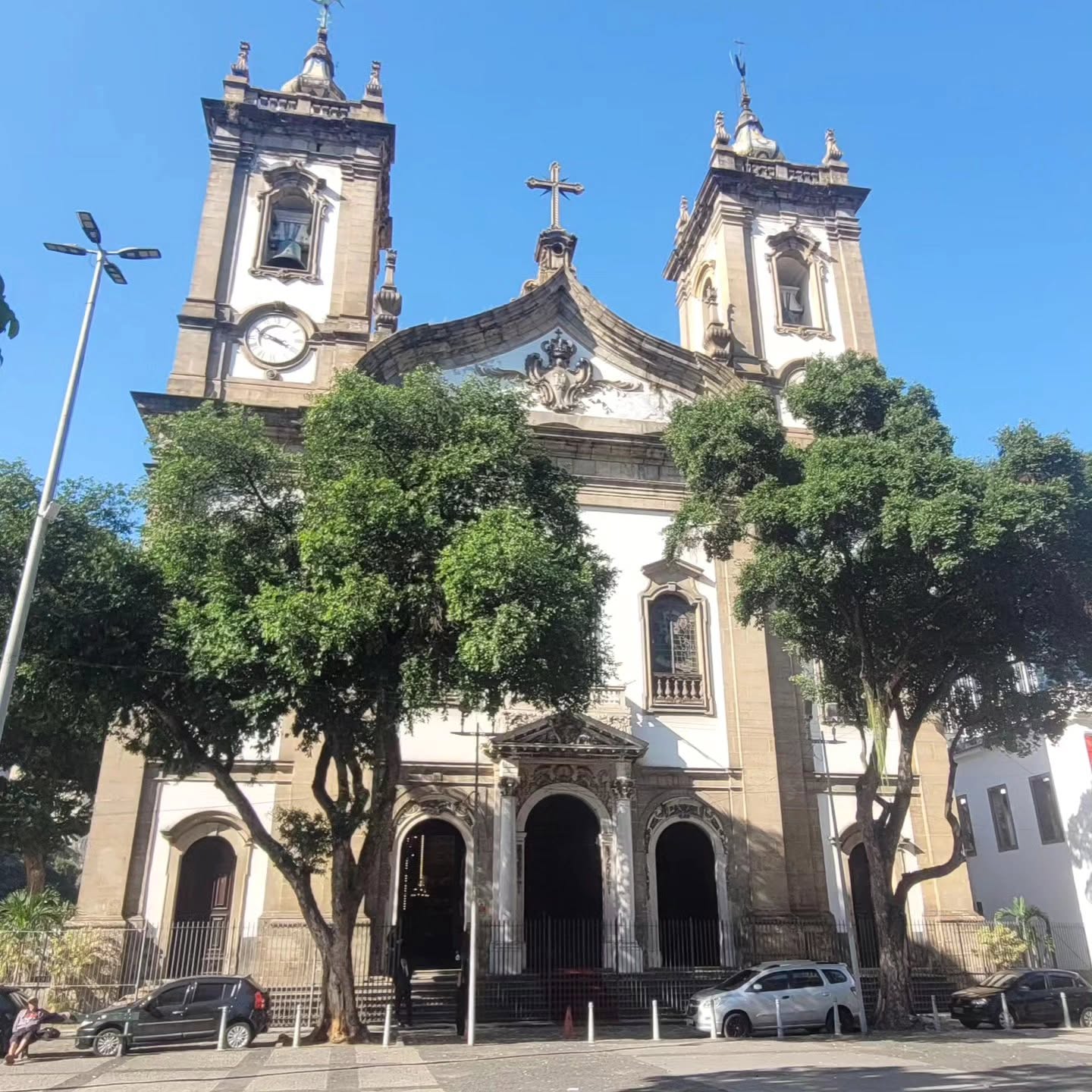
Igreja de Santa Cruz dos Militares
Built on the site of a 17th-century fort, this church has one of the more unusual façades in Rio’s historic center — modeled on Rome’s Church of the Gesù, with its bell tower unusually placed at the rear rather than flanking the entrance. Sculptor Mestre Valentim carved much of the interior between 1802 and 1812, and although a 1923 fire destroyed the original altarpiece, it was faithfully rebuilt from surviving photographs. The church has been formally attached to the Vatican Basilica since 1923, a rare distinction, and Mestre Valentim himself is buried inside.
Take a moment in front of the beautiful altar: it represents the suffering of the Virgin Mary with Jesus — the same suffering, as this military church quietly reminds us, endured by the mothers of soldiers sent to war in every era.
Igreja de São José
Tucked near the Rio de Janeiro state legislature, this church traces its roots to a small 1608 hermitage and briefly served as the city’s cathedral in the 17th century. Its late-Baroque interior features Rococo woodwork by Simeão de Nazaré, a student of Mestre Valentim. Behind the main altar, in a narrow passage wide enough for one person at a time, stands a striking life-size scene of Saint Joseph’s death, flanked by figures of Jesus and Mary — one of the more quietly moving details tucked into any of Rio’s historic churches.
Here’s a mystery I love telling on my tours: to this day, nobody knows for certain whether São José is the first church of Rio. During the French invasion of 1711, the city’s documents were destroyed in the battle — and with them, the records that could settle the question. Three centuries later, the debate is still open.
Igreja de Nossa Senhora de Montserrat (Mosteiro de São Bento)
The church at the heart of the São Bento Monastery is dedicated to Our Lady of Montserrat, and its plain, almost austere exterior gives no hint of what’s inside: a Baroque and Rococo interior drenched in gold leaf, carved over generations by artists including the monk-sculptor Domingos da Conceição and, later, Inácio Ferreira Pinto. Sunday’s 10 a.m. Mass, sung in Gregorian chant by the resident Benedictine monks, adds another layer entirely to the experience.
Catedral Metropolitana de São Sebastião
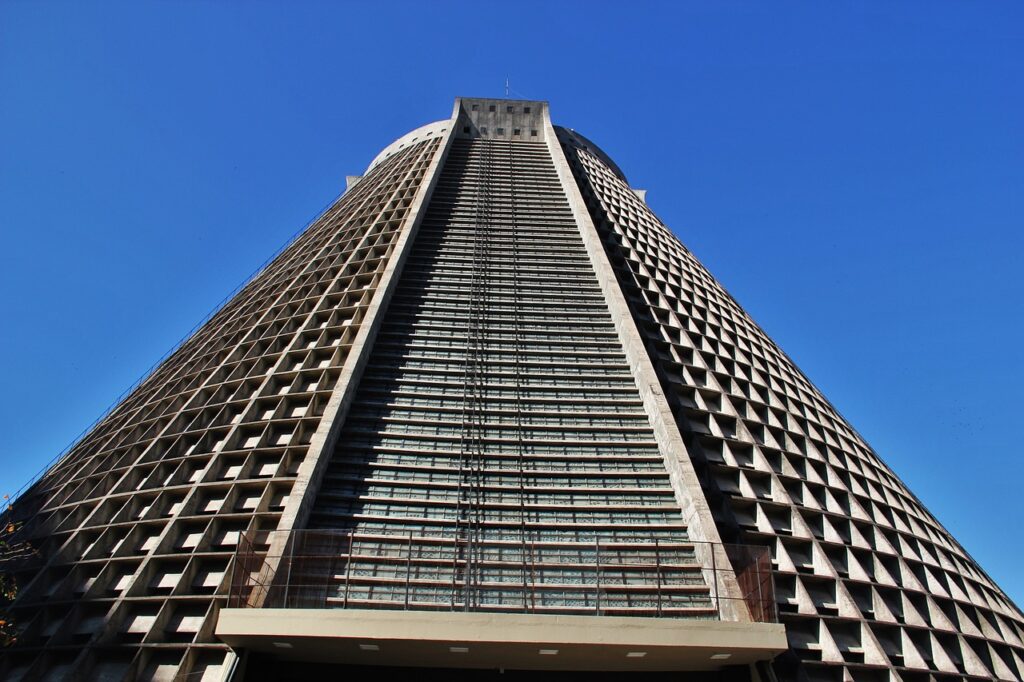
A dramatic departure from the Baroque churches nearby, Rio’s modern cathedral was completed in 1979 and designed by Edgar Fonseca with a shape inspired by Mayan pyramids. The cone-shaped concrete structure rises 75 meters and can seat up to 20,000 people. Still, its real showstopper is a set of four towering stained-glass windows running floor to ceiling, flooding the interior with shifting color throughout the day. It’s proof that Rio’s church architecture didn’t stop evolving after the colonial era.
The Rio de Janeiro cathedral has received two papal visits — John Paul II and Francis. And since Brazil remains the largest Catholic country in the world, we’re hoping Pope Leo makes it three before long.
Igreja Nossa Senhora da Paz
In the heart of Ipanema, this early 20th-century church stands out for its Neo-Romanesque style with Gothic touches, designed by architect Gastão Bahiana and completed in the early 1920s. Its altar is Italian marble, its stained-glass windows and bells came from Germany, and its centerpiece image of the Virgin was carried in procession all the way from Copacabana when the church first opened. It’s also woven into local music history: composer Pixinguinha died here in 1973 during a baptism ceremony, and to this day, Rio’s famous Banda de Ipanema Carnival bloco pauses in front of the church each year as a tribute.
Visit Them With a Local
Together, these nine churches trace nearly four centuries of religious art in Rio — from 17th-century gold-leafed altars to a modern cathedral wrapped in stained glass. Most of the historic-center churches sit within easy walking distance of one another, which makes them perfect to combine in a single morning.
Want to hear these and other curiosities in person, standing in front of the altars themselves? That’s exactly what our private tours of Rio’s historic center are for — including the stories that never made it onto the plaques. Our historic tour of Rio covers several of these churches, always private, always at your pace.