

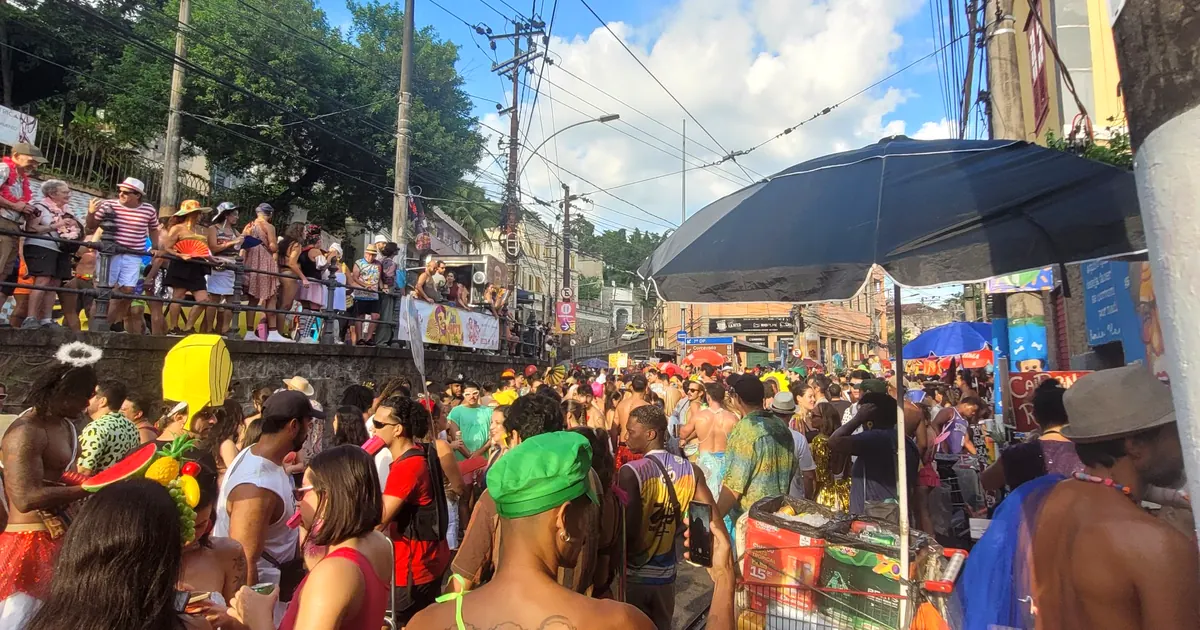

Rio de Janeiro Carnival 2027: The Complete Guide
Every year, somewhere around October, travelers start asking us the same question: “Is it too late to plan Carnival?” For 2027 the honest answer is no, but you have less time than you think. Carnival 2027 falls almost two weeks earlier than usual, which catches a lot of travelers off guard.
We at Rio Cultural Secrets were born and raised here, and we have been guiding visitors through this city since 2012. Carnival is the week when Rio is most itself: loud, generous, sweaty, emotional and completely sleepless. This guide covers what you actually need to plan it well, from where to stay to what the Sambadrome really costs, with the kind of detail we share with our own guests.
Where to Stay in Rio de Janeiro for Carnival
Where you sleep shapes your whole Carnival. Some neighborhoods turn into a nonstop street party, others stay calm enough to rest between nights at the Sambadrome. These are the areas we recommend to our guests.
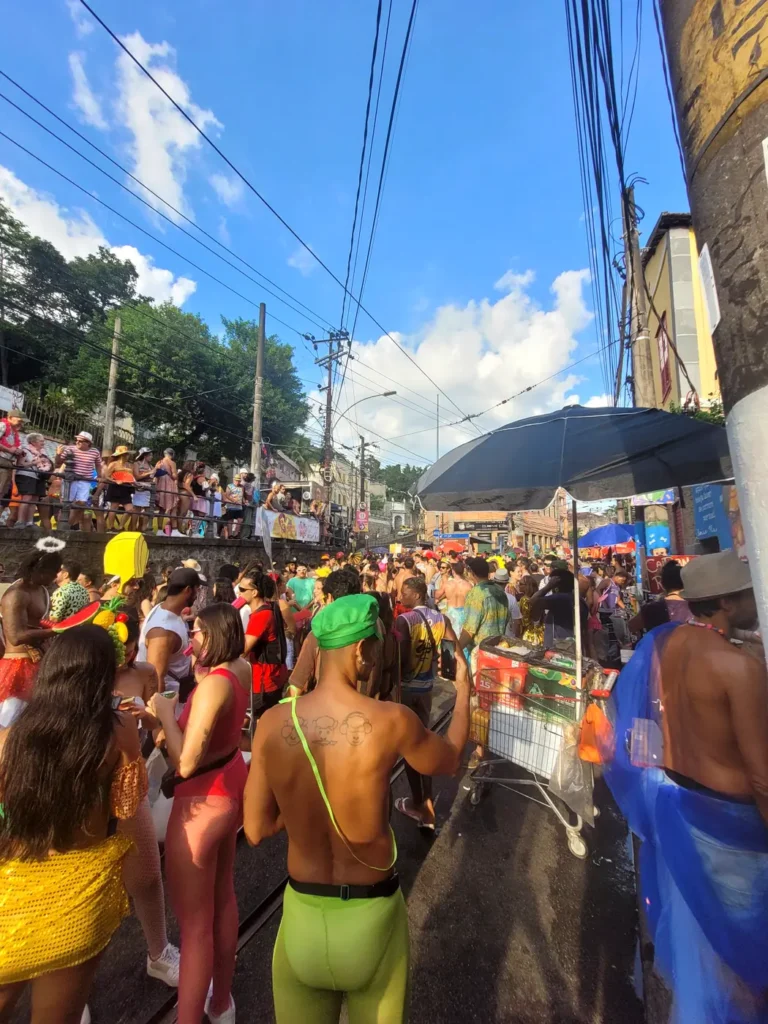
Santa Teresa: right in the middle of the party. If you came to Rio for Carnival itself, this is where we send you. Santa Teresa has blocos every single day of Carnival, and the neighborhood sits right above Glória, Aterro do Flamengo and Centro, where the most joyful and colorful blocos in the city take place. Add boutique hotels in restored mansions and views over Guanabara Bay, and you have the whole street party at your feet. Keep in mind the streets are steep and cobbled, and on bloco mornings they get packed, so it suits travelers who want to be in the thick of it.
Copacabana: beach first, Carnival nearby. The classic choice for first-timers. Hotels along Avenida Atlântica put you right on the sand, and the neighborhood does have blocos, just far fewer than Centro and Santa Teresa. Copacabana is also home to the Copacabana Palace, whose black-tie Carnival ball is one of the most glamorous nights of the season. Just know that an oceanfront room during Carnival is not a quiet room.
Ipanema and Leblon: the party at your own pace. Our pick for travelers who want to enjoy Carnival without living inside it 24 hours a day. You get the best restaurants in the city and calmer mornings. There are blocos here too, like the traditional Banda de Ipanema, but in much smaller numbers than downtown, so you decide when to dive in. Leblon is the calmer of the two, a real advantage after a Sambadrome night that ends at sunrise.
A few things we always tell our guests:
- Book as early as possible. Carnival is peak season, rates climb steadily, and the best rooms go first.
- Expect minimum stays. Many hotels sell Carnival only as packages of four or five nights or more, with stricter cancellation rules than the rest of the year.
- Ask the hotel whether its street becomes a bloco route. Some beachfront avenues close to traffic on certain days, and it helps to know in advance.
- If you are sensitive to noise, request a room facing away from the main avenue.

When Is Carnival in Rio de Janeiro 2027?
Rio Carnival 2027 runs from Friday, February 5, to Wednesday, February 10, 2027, with the Champions’ Parade closing the Sambadrome season on Saturday, February 13.
Carnival follows the Christian calendar, and its last day always falls 47 days before Easter Sunday. Easter 2027 is on March 28, one of the earliest possible dates, so Carnival moves up to early February instead of its more usual mid-month slot. That is the main reason so many people are planning late this year.
Date | What happens |
|---|---|
Friday, Feb 5 | Série Ouro parades, night 1 (second division) |
Saturday, Feb 6 | Série Ouro parades, night 2 |
Sunday, Feb 7 | Special Group parades, night 1 |
Monday, Feb 8 | Special Group parades, night 2 |
Tuesday, Feb 9 | Special Group parades, night 3 |
Wednesday, Feb 10 | Ash Wednesday: judges’ scores are read and the champion is announced |
Saturday, Feb 13 | Champions’ Parade with the top six schools |
The running order of the 12 Special Group schools is already set:
- Sunday, February 7: União de Maricá, Beija-Flor de Nilópolis, Paraíso do Tuiuti and Unidos de Vila Isabel.
- Monday, February 8: Mocidade Independente de Padre Miguel, Unidos da Tijuca, Acadêmicos do Salgueiro and Imperatriz Leopoldinense.
- Tuesday, February 9: Portela, Unidos do Viradouro (the reigning champion), Acadêmicos do Grande Rio and Estação Primeira de Mangueira.
If you can only attend one night, we usually lean toward the Tuesday lineup. Portela and Mangueira are two of the most traditional schools in Brazil, and closing the competition with Mangueira’s green and pink is a moment Cariocas wait all year for.
When Does Rio de Janeiro Carnival Start?
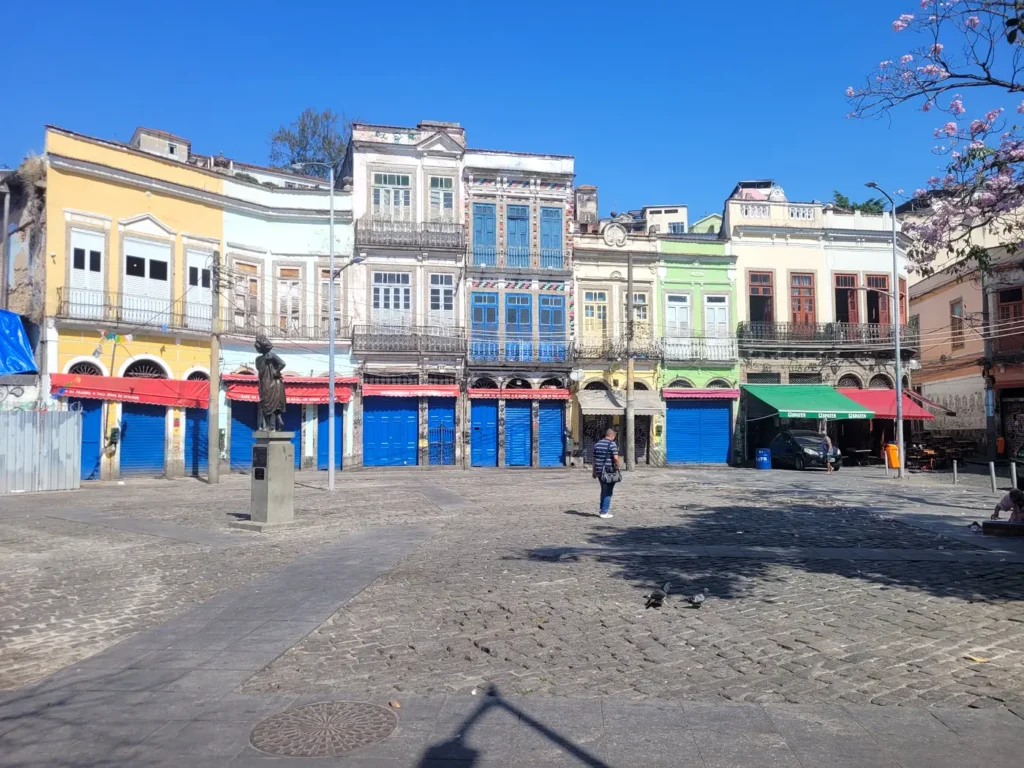
Officially, Carnival 2027 starts on Friday, February 5. By tradition, the mayor hands the key of the city to King Momo, the plump, cheerful monarch of Carnival, and for the next five days the city belongs to him.
In practice, Rio warms up much earlier. Street blocos start parading on weekends in January, in what locals call the pre-Carnival. The samba schools also hold free technical rehearsals at the Sambadrome in late January:
- Saturday, January 23: União de Maricá, Beija-Flor and Paraíso do Tuiuti
- Sunday, January 24: Vila Isabel, Mocidade and Unidos da Tijuca
- Saturday, January 30: Salgueiro, Imperatriz Leopoldinense and Portela
- Sunday, January 31: the ceremonial washing of the Sambadrome runway, followed by Viradouro, Grande Rio and Mangueira
And it doesn’t end on Ash Wednesday either. Blocos keep going through the following weekend, which in 2027 coincides with the Champions’ Parade. If your schedule is flexible, arriving in late January gives you the rehearsals, the pre-Carnival blocos and much lower crowds.
On the main parade nights, the show starts in the evening and runs straight through to dawn. Plan to sleep in the next day.
Fun Facts About Rio de Janeiro Carnival
- The Sambadrome was designed by Oscar Niemeyer. The same architect behind Brasília built the parade avenue in a matter of months, and it opened in 1984. Its official name is Passarela Professor Darcy Ribeiro, honoring the anthropologist who championed the project.
- Samba schools are not schools. They are community associations, many of them close to a century old. As the story goes, the name came from the first group, Deixa Falar, which rehearsed near a teacher-training school in the Estácio neighborhood and jokingly called itself a “school” of samba.
- Each school is judged by 36 judges. They score nine categories, including the drum section, the samba song, the costumes, the floats and the elegant pairing of the master of ceremonies and the flag bearer. Titles have been decided by a tenth of a point.
- A single school can bring thousands of performers. Each one has a little over an hour to cross the runway, and running late costs points.
- The oldest bloco is older than the Sambadrome by 66 years. Cordão da Bola Preta was founded in 1918 and, in 2025, was recognized as intangible cultural heritage of the State of Rio de Janeiro.
- The street party is enormous. In 2026, the city authorized 462 blocos and expected around 6.8 million revelers in the streets alone.
- The free rehearsals are a hit with locals. Around 360,000 people watched the technical rehearsals at the Sambadrome in 2026.
- Carnival is a year-round job. The floats and costumes are built in giant workshops at the Cidade do Samba, near the port, and work on next year’s parade starts almost as soon as this year’s ends.

How Much Does It Cost to Attend the Rio Carnival Sambadrome Parade?
The good news first: the Sambadrome is far more affordable than most visitors expect, at least for basic seats. Here is how prices look for the 2027 Special Group nights, as of October 2026 (we convert at roughly R$5 to US$1; for cash, see where to exchange money in Rio de Janeiro):
Seat type | Price per night | What to expect |
|---|---|---|
Grandstands, sectors 2 to 11 (except 9) | R$250 (about US$50) | Unreserved concrete steps, lively local crowd |
Numbered chairs, sector 12 | R$250 (about US$50) | Your own seat, still in the open stands |
Sector 9 | Sold mostly through tourist packages | The “tourist sector,” with numbered seats and more foreign visitors |
Frisas (open boxes for 6 people) | R$1,835 to R$10,200 per box (about US$366 to US$2,032) | Right beside the runway, the closest view of the dancers |
Camarotes (private suites) | Set by each operator | Food, open bar, air-conditioned lounges, often a party after the parade |
A few details that matter for international visitors:
- Half price is mostly for Brazilians. The R$125 half-price ticket applies to students, seniors over 60 and some other groups, and it is linked to a Brazilian taxpayer number (CPF). Most foreign visitors pay full price.
- Frisas can only be paid by PIX, Brazil’s instant payment system, which most foreign cards cannot use directly. If you want a frisa, sort out the payment well in advance.
- Tickets are sold in stages, and the cheapest seats go fast. Prices for the popular sectors 12 and 13 had not been fully announced by October 2026.
- Buy only from the official seller. LIESA, the league that organizes the Special Group, sells through Ticketmaster Brazil. Resale offers on social media are a common trap around Carnival.
- The Série Ouro nights (February 5 and 6) are much cheaper, and a great way to feel the Sambadrome without the Special Group price tag.
Our honest advice for comfort: the grandstands are concrete steps with no backrest, and a parade night lasts eight hours or more, often into the early morning. If you are traveling with older family members or simply value a good seat, a numbered chair, a frisa or a camarote is worth the extra cost. Camarote prices vary a lot, so always compare what each package actually includes before paying.
How Did the Carnival Tradition Begin?
Carnival arrived in Brazil with the Portuguese in the 1600s, in a rowdy form called entrudo: people threw water, flour and even mud at each other in the streets for days before Lent. The authorities tried to ban it more than once.
In the 19th century, Rio’s elite looked to Paris and Venice instead, and Carnival moved into elegant masquerade balls. Meanwhile, the streets developed their own traditions: cordões and ranchos, groups that paraded with music, costumes and drums.
The real turning point came from Rio’s Afro-Brazilian communities. Around Praça Onze, in the homes of Bahian matriarchs like Tia Ciata, musicians mixed African rhythms with polka, maxixe and other urban sounds, and samba was born. In 1917, “Pelo Telefone” became the first song registered as a samba. A decade later, Deixa Falar, the first samba school, was founded in Estácio, and in 1932 the schools held their first organized competition.
The parades grew bigger every decade until the city needed a permanent stage. In 1984, the Sambadrome opened, and it has hosted the competition ever since. The street blocos, which had faded for a few years, came roaring back from the late 1990s and are now as central to Carnival as the parades themselves. To go deeper into the city’s past, start with our guide on how to discover Rio de Janeiro history.
What Are the Must-See Rio de Janeiro Street Blocos at Rio Carnival 2027?
Rio has hundreds of blocos, and choosing well makes all the difference. After many Carnivals in the streets, these are the ones we love most, one for each day. The city publishes the official 2027 schedule shortly before Carnival, so check exact times and meeting points as soon as it is out.
Friday, February 5: Carmelitas (Santa Teresa). Our favorite way to open Carnival. The bloco is inspired by a local legend about a nun who climbed over the convent wall to join the party, and plenty of revelers dress as nuns. Joyful, irreverent and very Santa Teresa.
Saturday, February 6: Céu na Terra (Santa Teresa, morning). An early-morning bloco that winds through the hilltop streets with brass, percussion and an almost theatrical atmosphere. Watching the morning light over Santa Teresa while this band plays is one of the most beautiful moments of Carnival.
Sunday, February 7: Cordão do Boitatá and Boitolo (Centro). Sunday belongs to historic downtown. Boitatá brings a huge band playing the best of Brazilian music, from samba and marchinhas to frevo, and Boitolo carries the party on with its own free-spirited parade through the old streets of Centro.
Monday, February 8: Orquestra Voadora. A brass-and-percussion orchestra that helped reinvent Rio’s street Carnival, mixing samba with funk, Afrobeat and pop. Big, colorful and impossible not to dance to.
Tuesday, February 9: Sargento Pimenta. The Beatles in samba rhythm. Sargento Pimenta turns Lennon and McCartney classics into Carnival anthems, and it is the perfect way to close the five days.
Other famous names. Cordão da Bola Preta, the oldest bloco in the city, traditionally takes over Centro on Carnival Saturday with hundreds of thousands of people, and Banda de Ipanema, a highlight of our LGBTQ+ travel guide to Rio de Janeiro, has been an Ipanema institution since 1965. Both are worth knowing about, but be ready for enormous crowds.
You will also find megablocos with pop stars on trucks along the downtown circuit. They are spectacular, but the crowds are huge. For travelers who prefer a more comfortable experience, we usually recommend the morning neighborhood blocos: better music, friendlier crowds and you are back at your hotel in time for lunch.
At any bloco, carry only what you need: a copy of your passport, one card and a little cash. Keep your phone out of sight in the crowd.
Is the Rio Carnival Free?
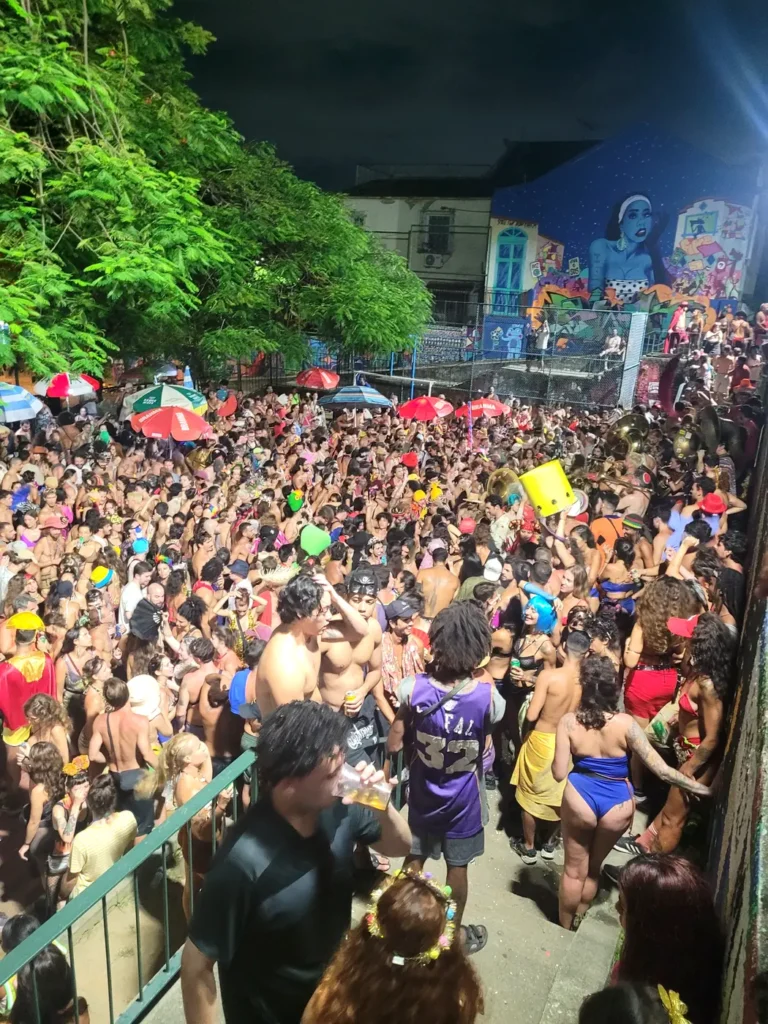
A big part of it is. All street blocos are free and open to anyone, and so are the technical rehearsals at the Sambadrome in late January. You can spend a whole Carnival in Rio without buying a single ticket and still have an unforgettable time.
What you pay for is the samba school competition at the Sambadrome, the Champions’ Parade, private camarotes and the formal balls, like the one at the Copacabana Palace. Our suggestion is to mix both: at least one night at the Sambadrome, because nothing on television prepares you for the sound of the drums in person, and a few mornings at the blocos to see how Cariocas celebrate among themselves.
Where Does Rio Carnival Take Place?
Carnival takes over the whole city, but it has a few main stages:
- The Sambadrome (Marquês de Sapucaí), in the Centro region, near Praça Onze. This is where the samba school parades, rehearsals and the Champions’ Parade happen.
- The streets. Blocos parade all over Rio, from historic downtown and Santa Teresa to Copacabana, Ipanema, Leblon, Botafogo and Jardim Botânico.
- The samba school courts. In the months before Carnival, schools hold weekly rehearsals at their home courts, called quadras. It is one of the most authentic Carnival experiences, and many are open to visitors.
- The ballrooms. Hotels and clubs host Carnival balls, the most famous being the Copacabana Palace ball on Carnival Saturday.
Do I Need a Costume for Rio Carnival?
No, a costume is not mandatory, but it makes everything more fun.
At the Sambadrome, spectators wear normal clothes. Think comfortable and light: it is midsummer and humid, so breathable fabrics and good shoes for long hours are what you need. Bring a light rain poncho, as evening showers are common in February.
At the blocos, costumes are part of the culture. Cariocas go all out (it’s one of the things Cariocas do that tourists find weird), but you don’t need anything elaborate: glitter (biodegradable, please), a flower crown, a colorful skirt or a themed shirt is plenty. Some blocos have their own dress code, like Bola Preta’s polka dots. Wear closed shoes, as streets get crowded and messy.
Want to parade yourself? Visitors can buy a costume from a samba school and join one of its wings on the runway. It is an unforgettable experience, but it requires planning: costumes sell out, need to be picked up in advance, and some schools ask you to learn the samba song. If this is on your bucket list, start planning early.
Should You Book Sightseeing Tours During Carnival?
We say this as a tour company: during Carnival, it’s better not to. For five days, much of Rio simply stops. Attractions like the Botanical Garden and the museums and historic sites of Centro close, and the city fills with traffic and street closures. The only major sights that stay open are Christ the Redeemer and Sugarloaf Mountain, and with every visitor in town heading to the same two places, a visit turns into an ordeal of long lines and waiting.
If you want to explore Rio properly, with its history, its best viewpoints and its neighborhoods, our advice is to arrive a few days before Carnival or stay a few days after. You get the city at its best, and you save Carnival week for what it does best: the music, the blocos and the Sambadrome. For those extra days, our list of the 17 best things to do in Rio de Janeiro and our tips on where to escape the crowds in Rio are good places to start.
