


April 30, 2026

Best Views Rio de Janeiro – Ultimate Guide to the City’s Most Spectacular Lookouts
Rio de Janeiro delivers some of the most dramatic urban panoramas on Earth. When granite peaks rise straight from the Atlantic, when tropical forest meets favela meets beach, you get viewpoints that few places in the world can match. This guide covers the absolute best views in Rio de Janeiro—from sunrise hikes to sunset cable car rides—with everything you need to plan your visit.
Quick answer: the very best views in Rio de Janeiro
Looking for the short version? Here are the standout viewpoints that make Rio’s scenery absolutely stunning:
- Morro Dois Irmãos (Two Brothers Mountain) – Sunrise over Ipanema and Leblon; best at dawn (5:15-5:45 am in summer)
- Sugarloaf Mountain (Pão de Açúcar) – 360° panoramic views of Guanabara Bay; best 1-2 hours before sunset
- Mirante Dona Marta – Classic postcard panorama with Christ the Redeemer and Sugarloaf; best at sunrise
- Christ the Redeemer (Corcovado) – Iconic Christ statue plus sweeping city vistas; best at 8 am opening or late afternoon
- Arpoador Rocks – Legendary beach sunset between Copacabana and Ipanema; best 5:30-6:30 pm
- Vista Chinesa – Jungle-framed view over the South Zone; best morning for clear skies
- Parque da Cidade Niterói – Full skyline of Rio from across the bay; best late afternoon to sunset
Each viewpoint offers something different—whether you want to work hard on a trail or step out of a taxi for an incredible view.
Why Rio de Janeiro has such unforgettable viewpoints
Rio de Janeiro’s geography is unlike that of any other major city in the world. The Atlantic coastline collides with ancient granite peaks such as the 710-meter Corcovado and the 396-meter Sugarloaf. At the same time, Tijuca National Park—the world’s largest urban forest at nearly 40 square kilometers—spreads through the city’s interior.
This creates viewpoints where you can see near-vertical drops from jungle-clad summits directly into urban beaches. Guanabara Bay stretches 30 kilometers wide, dotted with islands and crossed by the serpentine Rio-Niterói Bridge. From any elevated mirante, you’ll capture the entire city: Ipanema Beach curving 4 kilometers along the coast, hillside favelas housing hundreds of thousands of residents, Centro’s high-rises, and forested peaks—all in a single panorama.
This guide focuses on specific concrete viewpoints with practical details on how to reach them safely and at the right times.
Morro Dois Irmãos (Two Brothers Mountain): dramatic sunrise over Ipanema
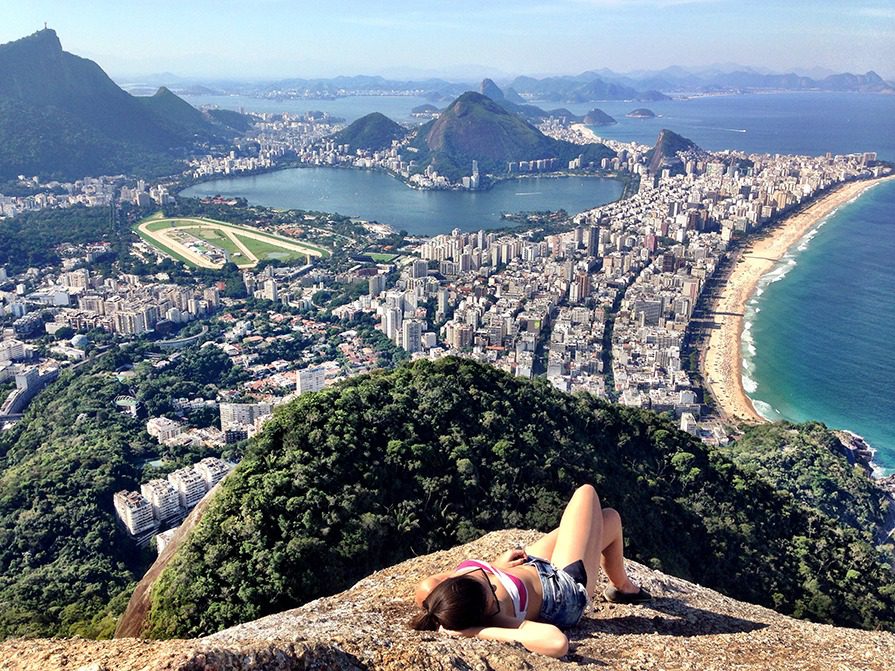
The twin 534-meter peaks at the end of Leblon are arguably Rio’s single best viewpoint. The hike through the Vidigal favela offers a sunrise experience that photographers and adventure travelers dream of.
The route: Start in Vidigal, taking a moto-taxi (R$10-20) or kombi van up to the trailhead. From there, it’s a 45-60 minute hike covering 2.5 kilometers with 400 meters of elevation gain. The trail is steep but manageable for anyone with moderate fitness and fits well into broader adventure and active tours in Rio de Janeiro.
The view: From the peak, you’ll see Ipanema and Leblon beaches stretching 7 kilometers, Lagoa Rodrigo de Freitas, the dramatic cliffs of Pedra da Gávea, and Rocinha—South America’s largest favela—sprawling across the hillside.
When to go: Arrive for sunrise around 5:15-5:45 am in Brazilian summer (December-March). Morning skies are clearer than hazy afternoons.
Safety: This hike is absolutely worth doing, but it requires a guided tour (R$150-300 per group) or a local guide. Respect Vidigal residents, avoid flashing valuables, and check recent security conditions before going.
Sugarloaf Mountain (Pão de Açúcar) and Urca: classic postcard panoramas
Sugarloaf’s silhouette at Guanabara Bay’s entrance is one of Rio’s most recognized images. The two-stage cable car—operational since 1912—takes you from Praia Vermelha to Morro da Urca (220 meters), then to the 396-meter summit.
What you see:
- From Morro da Urca: Guanabara Bay, Niterói Bridge spanning 14 kilometers, Botafogo Cove, and Christ the Redeemer in the distance
- From Sugarloaf summit: The 4-kilometer arc of Copacabana Beach, downtown Rio’s 200+ high-rises, ocean islands, and nearby forested hills
Timing and tickets: Visit 1-2 hours before sunset (5-7 pm in summer) to watch the city lights come to life. High season (December-February, Carnival, New Year’s Eve) means 2-hour queues—pre-book online at R$130-160 for adult round-trip tickets. Children and seniors get 50% discounts.
Bonus viewpoint: Below Sugarloaf, Mureta da Urca is a low stone wall where 500+ locals gather nightly with R$10 beers, watching the sunset over the harbor. This quiet neighborhood vibe makes it a cool late afternoon destination and pairs naturally with private Sugarloaf Mountain cable car experiences.

Mirante Dona Marta & Mirante do Pedrão: big views without big hikes
These viewpoints deliver epic panoramas for travelers who want impressive scenery without a trail. Both are popular at sunrise, when the light is soft and the crowds are minimal.
Mirante Dona Marta sits at an elevation of 360- 400 meters between Santa Teresa and Cosme Velho. The view is majestic: Sugarloaf, Christ the Redeemer, Maracanã Stadium (capacity 78,838), Lagoa Rodrigo de Freitas, and the entire Guanabara Bay spread before you. Access is a short walk from the parking lot—taxi or Uber from Centro costs R$30-50. Entry is free, though guided tours cost about R$50 or can be part of an 11-hour full-day tour of Rio de Janeiro.
Mirante do Pedrão offers a calmer alternative, reached via elevator and stairs. It overlooks Santa Marta favela and Botafogo, with easier access for those with limited mobility. The scenery here emphasizes favela architecture against bay views.
Visit at sunrise or early morning. Avoid wandering unfamiliar areas after dark.
Beach-level sunsets: Arpoador Rocks, Leblon Viewpoint & Mureta da Urca
Not all great Rio views require altitude. Some of the city’s most impressive moments happen at sea level during sunset.
Arpoador Rocks is the rocky point between Copacabana and Ipanema where locals clap when the sun dips below the horizon. You’ll see Ipanema stretching toward Dois Irmãos, with occasional rainbows after fast tropical showers. Reach it via the beachwalk—crowds of 1,000+ mean it feels safe. Free, busy, and absolutely stunning.
Mirante do Leblon sits at Leblon’s western tip where the coastal road climbs toward Vidigal. Late-afternoon light makes this the classic panorama over both beaches, with Dois Irmãos in the background, and nearby you’ll find some of the best bars and nightlife in Rio de Janeiro for post-sunset drinks.
Mureta da Urca is that laid-back stone wall along the bay where people sit with cold beers, watching sunset over the harbor with Christ the Redeemer in the distance. It’s quiet, local, and perfect for casual evenings.
Keep belongings close at busy beach sunsets. Carry only what you need.
Christ the Redeemer (Corcovado): the iconic viewpoint everyone must see once
The iconic Christ statue—30 meters tall on a 710-meter peak inside Tijuca National Park—is Rio’s most famous monument. Completed in 1931, it draws 2 million visitors annually for good reason: the Redeemer statue platform offers a full sweep of the South Zone beaches, Lagoa Rodrigo de Freitas, downtown Rio, and distant mountains.
How to get there:
- Cogwheel train from Cosme Velho through the forest (20 minutes, R$100-140 including entry, pre-book in peak season) – consider specialized Corcovado Train visits to Christ the Redeemer if you want a guided experience
- Official vans from Copacabana or Largo do Machado (R$80-120)
- Hiking trail from Parque Lage (2 hours, strenuous 600m gain, guided tour R$200+, for fit and experienced hikers only)
Practical tips:
- Arrive at 8 am opening or late afternoon on weekdays for fewer crowds
- Check live webcam before going—fog obscures views 30% of afternoons
- Full tickets range R$81-255 depending on transport
- Drones are banned
- Bring sun protection and water
Forest lookouts: Vista Chinesa, Mesa do Imperador & Pedra Bonita
Tijuca National Park offers multiple viewpoints blending jungle scenery with cityscapes.
Vista Chinesa is a pagoda-style structure built in 1903 honoring Chinese tea workers, located above Jardim Botânico. The view frames South Zone beaches and Christ the Redeemer through Atlantic rainforest. Reach it by car or taxi (R$40 from Ipanema) with a short walk from the road. Free entry, and it’s often included in customizable private Rio sightseeing tours.
Mesa do Imperador is a stone table area historically used by Emperor Dom Pedro II for picnics. It’s close to Vista Chinesa—combine both in a 1-hour loop for a nature-oriented morning.
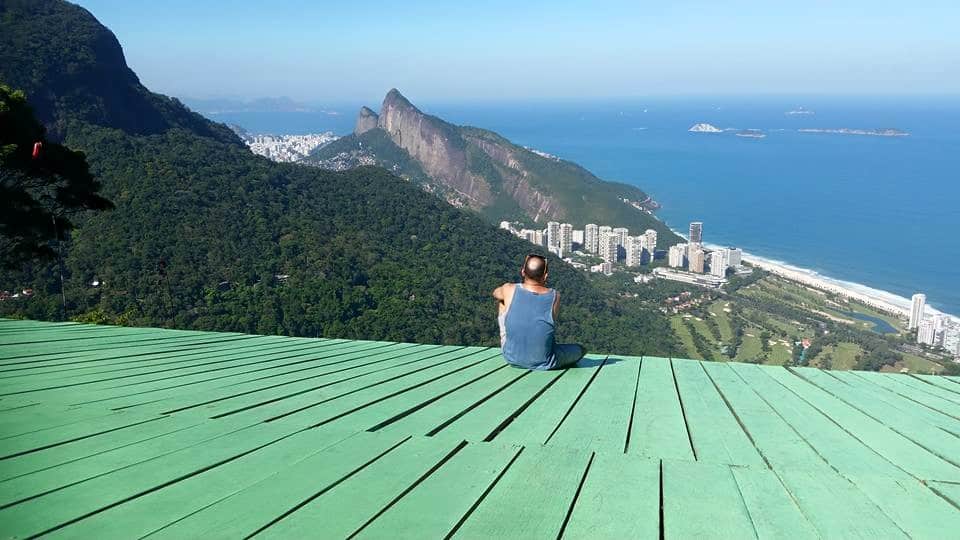
Pedra Bonita requires a 30- 45-minute hike from the São Conrado trailhead. The view covers São Conrado beach, Pedra da Gávea’s cliffs, and Barra da Tijuca. This is also the hang-gliding launch ramp where people soar over the coast.
Best times are mornings for clearer skies. Bring mosquito repellent.
Across the bay: Parque da Cidade Niterói and other Niterói viewpoints
Niterói sits across Guanabara Bay, connected by the 14-kilometer Rio-Niterói Bridge. From here, you get the broadest panoramas of Rio’s skyline.
Parque da Cidade perches atop a 258-meter hill with multiple mirantes and paragliding ramps. You’ll see Sugarloaf, Christ the Redeemer, downtown Rio, and the full curve of the bay framed by forested cliffs. Free entry, open 6 am-10 pm. Access by car or Uber from Niterói center, or combine it with a Rio de Janeiro sunset tour featuring Christ and Sugarloaf for a full golden-hour experience on both sides of the bay.
Combine the park with nearby Itacoatiara Beach or MAC Niterói—Oscar Niemeyer’s flying-saucer museum—for a full-day trip. Conditions can be windy; bring a light jacket and check weather, as clouds hide Rio’s skyline about 20% of winter days.
Adrenaline views: Pedra da Gávea, Pedra do Telégrafo & hang gliding
For adventure travelers who want dramatic photos and don’t mind heights or effort:
Pedra da Gávea (842 meters) is one of Rio’s toughest hikes—2-3 hours with steep scrambling and sections requiring ropes. The summit offers cliffs plunging straight into the ocean and views over Barra da Tijuca and São Conrado. Hire an experienced guide (R$300+) and start early. This climb demands good fitness and is one of the highlights in many top attractions guides to Rio de Janeiro.
Pedra do Telégrafo is famous for that optical-illusion photo where people appear to hang over a massive drop (the actual ledge is about 1 meter, much safer than it looks). It’s a half-day trip to Guaratiba, about an hour’s drive south plus a 40-minute hike. Weekend photo queues can hit 1-2 hours.
Hang gliding from Pedra Bonita launches you over São Conrado with aerial views of forest, favelas, and high-rises before landing on the beach. Tandem flights with licensed operators run R$500-700 for 15-20 minutes—an unforgettable adventure that you can pair with Sunset Sugarloaf Mountain fast-pass experiences for a full day of sky-high views.

Alternative angles: Lagoa, Santa Teresa hills & Tijuca National Park peaks
Beyond the famous spots, several locations give unique perspectives on Rio’s life and geography.
Lagoa Rodrigo de Freitas offers a flat 7.5-kilometer path perfect for sunset walks or bike rides (rentals R$20/hour). Christ the Redeemer reflects in the water at dusk. Kiosks like Palaphita-style venues make relaxed photo stops and fit easily into a wider 10-day Rio de Janeiro itinerary.
Santa Teresa hillside neighborhood reveals balconies and small mirantes overlooking Centro, the Lapa arches, and the bay. Wander by day using the historic tram or taxis—avoid steep walks in heat.
Tijuca National Park peaks like Pico da Tijuca (1,022 meters) demand strenuous 4-6 hour hikes but reward with 360-degree forest panoramas and distant views of Maracanã Stadium. These are more about nature immersion than postcard shots.
Safety, timing & practical tips for enjoying Rio’s viewpoints
Rio’s views are incredible, but planning with safety and logistics in mind makes the experience better.
Safety tips:
- Visit favelas and remote viewpoints only with trusted guides or updated local advice
- Avoid passports, large cash amounts, or flashy jewelry; keep camera use discreet
- Prefer daytime visits for lesser-known spots; stick to crowded viewpoints after nightfall
Best times of day:
- Sunrise works for hikes like Dois Irmãos (clearer skies, safety)
- Sunset suits Sugarloaf, Arpoador, Mureta da Urca
- Summer afternoons (December-March) can be hazy and extremely hot—early starts are best
Weather & seasons:
- Summer brings sudden showers and 80% humidity
- Winter (June-August) often has clearer 25°C weather, ideal for photography
Transport:
- Use official taxis, Uber (around R$2.50/km), or reputable tours
- Check traffic at peak hours, especially crossing to Niterói
How to combine the best viewpoints into a 2–3 day Rio itinerary
Group viewpoints by area to avoid backtracking:
Day 1:
- Sunrise at Mirante Dona Marta
- Christ the Redeemer mid-morning (beat crowds)
- Lagoa Rodrigo de Freitas and Vista Chinesa afternoon
- Sunset at Arpoador
Day 2:
- Morning hike to Morro Dois Irmãos
- Beach time in Ipanema and Leblon
- Late afternoon at Mirante do Leblon
- Sunset at Sugarloaf, drinks in Urca
Optional Day 3:
- Half-day at Parque da Cidade Niterói with Itacoatiara Beach or MAC Niterói
- Or swap for adventure: Pedra Bonita hike and optional hang gliding
Adjust based on fitness level and weather. Always check conditions and security updates before hikes.
Final thoughts: seeing Rio from every angle
Rio de Janeiro’s best views come from a mix of mountains, beaches, forest mirantes, and across-the-bay lookouts. Balance the super touristy iconic spots like Christ the Redeemer and Sugarloaf with at least one hike and one simple sunset moment at Arpoador or Mureta da Urca.
Planning around viewpoints helps you understand how Rio’s neighborhoods, favelas, forests, and beaches all fit together into the Cidade Maravilhosa. Bookmark this guide, explore beyond the obvious, and discover why Rio’s scenery makes it one of the most photogenic destinations on Earth.